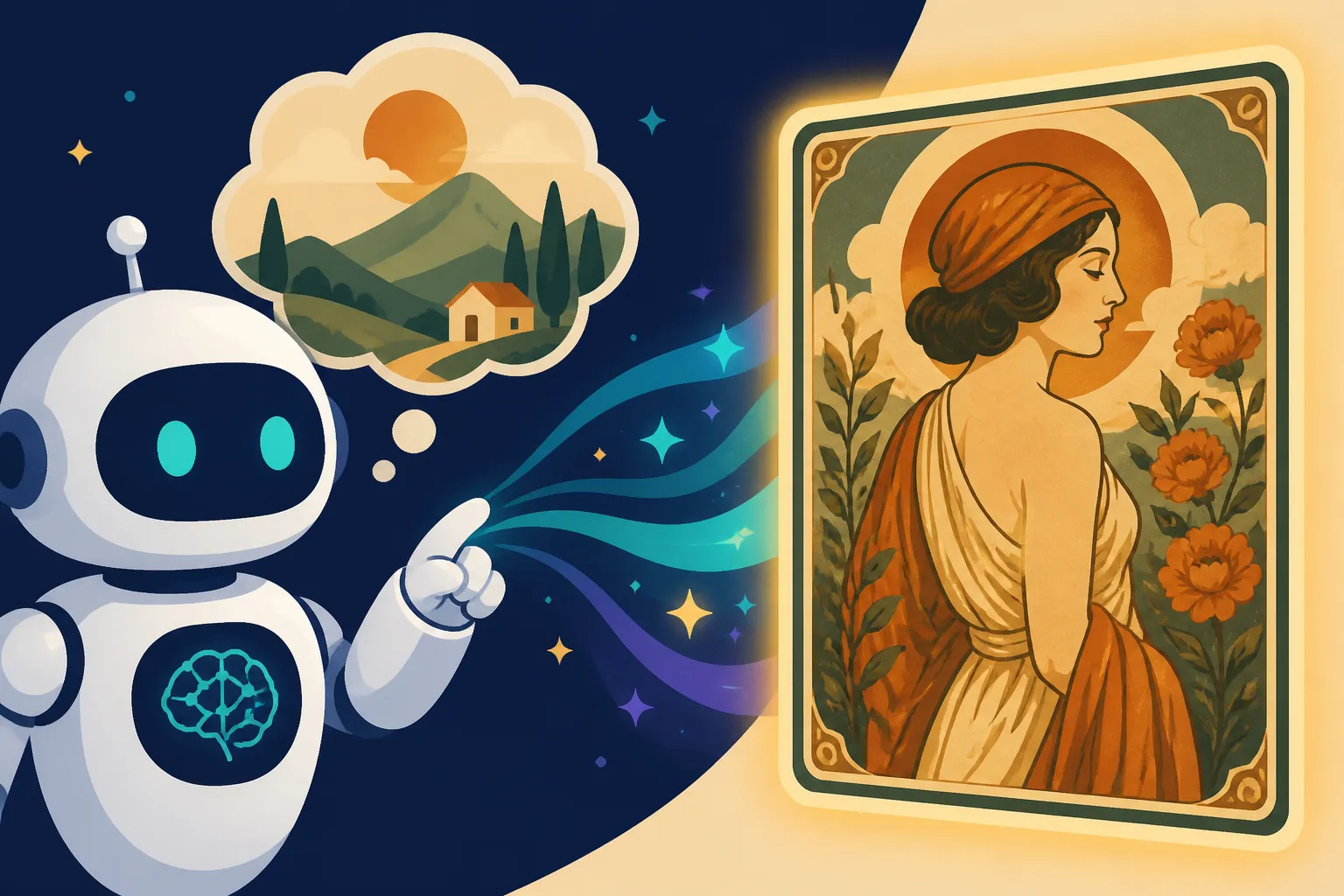
AI Prompt Examples for Vintage Art
Creating AI art with a truly vintage feel can be incredibly challenging. You might type in "vintage car" and get something that looks like a brand-new car with an Instagram filter, or "old photo" and end up with a blurry, generic image that lacks any real character or historical accuracy. The trick isn't just asking for "old"; it's about understanding the nuances of different eras, their artistic styles, and the specific visual cues that define them. This guide will walk you through precise AI prompt examples and a deep dive into the techniques needed to generate authentic, captivating vintage art, saving you from endless frustrating rerolls and delivering the classic aesthetics you crave.
Understanding the Essence of Vintage Art for AI Prompts
When we talk about "vintage" art, we're not just discussing something that's simply aged. There's a profound difference between a modern image that's been made to look old and a piece that truly captures the spirit and aesthetic of a bygone era. For AI image generators, this distinction is absolutely crucial. Without clear, detailed instructions, your AI tool will often default to a superficial "old" look rather than diving deep into the rich tapestry of historical artistic styles, printing methods, and cultural influences.
What Makes Something "Vintage" in AI Art?
The term "vintage" itself is broad, encompassing decades, even centuries, of artistic evolution. For an AI to truly understand what you're asking for, you need to break down "vintage" into its core components. It's about more than just a sepia filter. Consider these elements:
- Era-Specific Aesthetics: Each period had its unique visual language. Think of the bold, geometric patterns of the 1920s Art Deco movement compared to the flowing, organic lines of late 19th-century Art Nouveau. Or the optimistic, somewhat whimsical illustrations of the mid-century modern period versus the intricate, often dark romanticism of Victorian art. The AI needs to grasp these distinct visual signatures.
- Artistic Mediums and Techniques: How was art created back then? Was it a woodcut print, an oil painting, a hand-drawn illustration, or an early photograph? Each medium comes with its own set of textures, color limitations, and stylistic quirks. For instance, early color printing often involved halftones or offset lithography, which have distinct visual characteristics that differ from modern digital printing.
- Cultural Context and Subject Matter: Vintage art often reflects the societal norms, popular themes, and technological advancements of its time. A 1950s advertisement might feature a nuclear family and new appliances, while a 1930s travel poster would romanticize steamships and exotic destinations. Including relevant subject matter helps ground the image in its historical context.
Forgetting these distinctions is a common pitfall. If you simply prompt for "vintage car," you might get a modern sports car with a dusty, desaturated filter. To truly achieve a look from the 1950s, you need to specify "1950s chrome car, classic Americana, retro advertisement style." This level of specificity helps the AI tap into its vast training data more effectively.
Researching Your Desired Vintage Era
To genuinely master AI art generation for vintage styles, a little historical research goes a long way. You wouldn't expect a chef to create an authentic dish from a foreign cuisine without understanding its ingredients and preparation methods, and the same applies to AI art. Before you even start typing your prompt, take a few moments to immerse yourself in the era you're targeting.
- Visual Dive: Look at actual historical examples. Browse digital archives of old magazines, posters, advertisements, and photographs from the specific decade or artistic movement. Pinterest, museum digital collections, and even vintage marketplaces like Etsy or eBay can be goldmines. Pay attention to:
- Color Palettes: Were colors vibrant or muted? Were there common color combinations? For instance, the Technicolor era introduced rich, saturated hues to film, while earlier photography was monochromatic or hand-tinted.
- Typography: Fonts are powerful indicators of an era. Art Nouveau often used ornate, flowing scripts, while Bauhaus embraced clean, geometric sans-serifs.
- Composition and Layout: How were elements arranged on the page? Were images centrally focused, dynamic, or highly structured?
- Common Motifs and Symbols: What symbols or objects were prevalent? Flapper dresses and jazz clubs for the Roaring Twenties; atomic symbols and sleek spaceships for the Atomic Age; intricate patterns and natural forms for the Arts and Crafts movement.
- Keyword Collection: As you research, jot down descriptive keywords. These are the building blocks of your AI prompts. Instead of just "vintage," think "Art Nouveau," "1920s flapper illustration," "mid-century modern advertisement," "sepia-toned Victorian portrait," or "psychedelic concert poster."
- Understanding Artistic Movements: Familiarize yourself with key art movements and their defining characteristics. Knowing the difference between Futurism, Cubism, Surrealism, or American Regionalism will significantly enhance your ability to craft precise prompts. For those just starting out, a guide on how to write AI image prompts can be incredibly helpful for learning to translate your artistic vision into AI-understandable language.
By doing this groundwork, you're essentially providing the AI with a more comprehensive blueprint, moving beyond a vague request to a highly specific historical and artistic directive. This will dramatically improve the authenticity and quality of your vintage AI artwork.
Key Elements to Include in Your Vintage Art Prompts
Crafting effective prompts for vintage art requires a strategic layering of details. It's not enough to just name an era; you need to arm your AI with specific visual cues, stylistic instructions, and even psychological feelings associated with the period. Think of it as painting a picture with words, guiding the AI's imagination toward a specific historical aesthetic.
Specifying the Era and Art Movement
This is your foundational step. Without a clear indication of when your "vintage" should be from, the AI is left to guess, and its guesses are often uninspired. Be as precise as possible.
- Decades: The easiest way to specify is by decade. "1920s," "1950s," "1970s" are strong starting points.
- Example: "a sleek chrome automobile, 1950s style, driving through a suburban neighborhood"
- Bad Example: "old car" (might get a rust bucket from any era)
- Artistic Movements: If you know the specific movement, use it! This immediately conjures a rich set of aesthetic rules for the AI.
- Art Deco: "Art Deco skyscraper, geometric patterns, gold accents, streamlined design, New York City, 1930s"
- Art Nouveau: "Art Nouveau illustration of a woman with flowing hair, floral motifs, organic lines, Alphonse Mucha style"
- Bauhaus: "Bauhaus poster design, minimalist typography, primary colors, abstract geometric shapes, 1920s German design"
- Pop Art: "Pop Art style portrait of a celebrity, bold colors, comic book dots, Andy Warhol inspired, 1960s"
- Historical Context: Sometimes adding historical context helps. "Victorian era," "Industrial Revolution," "Post-War optimism."
- Example: "Victorian era London street scene, gas lamps, horse-drawn carriages, cobblestone streets, foggy atmosphere"
Remember, a prompt like "vintage poster" is vague. A prompt like "1920s Art Deco travel poster for the French Riviera" is infinitely more descriptive and will yield far superior results. This precision is a cornerstone of getting better AI image results.
Incorporating Visual Cues and Textures
Once the era is established, you need to layer in the sensory details that define how art from that period looked and felt. These are the imperfections, the material qualities, and the lighting conditions that scream "vintage."
- Color and Tone:
- Sepia: "sepia-toned photograph of a family picnic, 1910s, hazy sunshine"
- Monochrome/Black and White: "grainy black and white photograph of a bustling city street, 1940s, film noir aesthetic"
- Faded/Muted Colors: "faded pastel colors, 1950s advertisement, worn paper texture"
- Vibrant/Saturated (for specific eras): "vibrant psychedelic colors, swirling patterns, concert poster, 1960s"
- Texture and Degradation:
- Film Grain: "heavy film grain, old movie still, 1950s science fiction B-movie"
- Paper Texture: "aged paper texture, torn edges, faded ink, vintage comic book cover"
- Halftone/Screen Prints: "halftone dots, comic book style, Lichtenstein inspired, 1960s pop art"
- Distress/Wear: "distressed vintage look, scratches, creases, grunge aesthetic, worn out"
- Woodcut/Engraving: "woodcut illustration, intricate lines, medieval style, aged parchment"
- Lighting and Atmosphere:
- Soft, Diffused Light: "soft, diffused lighting, nostalgic glow, vintage portrait studio"
- Dramatic Shadows: "dramatic shadows, film noir lighting, detective story illustration"
- Vignette: "subtle vignette, dreamy atmosphere, antique postcard"
Combining these elements helps paint a complete picture. For example, instead of "old car picture," try "1930s Ford Model A, sepia-toned photograph, heavy film grain, slight vignette, rural American road." This level of detail is critical for crafting a nuanced image.
Guiding Composition and Subject Matter
Vintage art didn't just look different; it was often composed differently. The way elements were arranged, the perspective used, and the popular subjects themselves contribute significantly to the overall vintage feel.
- Compositional Styles:
- Symmetrical Layouts: Common in Art Deco posters or classical illustrations. "symmetrical composition, stylized figures, Art Deco travel poster"
- Dynamic/Diagonal Lines: Often used in propaganda posters or more energetic styles. "dynamic composition, diagonal lines, Soviet Constructivism, propaganda poster"
- Central Focus: "central focus, portrait of a woman, 19th-century oil painting style"
- Typographic Integration: How text was incorporated into the design. "integrated typography, bold sans-serif font, 1960s product advertisement"
- Subject Matter Specifics:
- Travel Posters: "vintage travel poster, mountain scene, steam train, 1950s graphic design"
- Advertisements: "retro advertisement for a household appliance, smiling family, 1950s aesthetic"
- Pin-up Art: "classic pin-up girl illustration, vibrant colors, 1940s style, Vargas inspired"
- Pulp Fiction Covers: "pulp fiction book cover, sci-fi adventure, rayguns, alien planet, 1930s illustration"
- Botanical/Zoological Illustrations: "detailed botanical illustration, ink and watercolor, 19th-century natural history"
- Perspective and Framing:
- Eye-level shot: "eye-level shot of a bustling market, 1920s, street photography style"
- High-angle view: "high-angle view of a city street, film noir, rainy night"
When you structure your prompt with these elements, you're giving the AI a comprehensive directive on not just the content, but the presentation of that content. This is a vital part of learning how to write a detailed image prompt. For instance, consider the difference between "a woman" and "a confident woman with a bob haircut, posed elegantly in an Art Deco lounge, with geometric patterns in the background, symmetrical composition, 1920s fashion magazine cover." The latter leaves far less to chance.
Deconstructing Vintage Styles: Specific Prompt Examples
Let's get down to the brass tacks and explore how to apply these principles to some iconic vintage styles. Each era has its distinct charm, and with the right combination of keywords, you can guide the AI to truly embody that aesthetic.
Art Deco Glamour (1920s-1930s)
The Art Deco era, roughly spanning the 1920s and 1930s, is synonymous with glamour, modernity, and opulence. It's characterized by strong geometric shapes, sleek lines, luxurious materials, and a sense of optimism and progress.
- Key Characteristics:
- Geometry: Sunbursts, chevrons, zigzags, concentric circles, layered shapes.
- Symmetry: Often highly symmetrical and balanced compositions.
- Materials: Gold, chrome, polished wood, glass, intricate tiling.
- Figures: Stylized, elongated, often elegant women in flapper attire or sophisticated men.
- Colors: Rich, often metallic colors like gold, silver, black, deep blues, emerald green, and ruby red.
- Themes: Jazz Age, skyscrapers, luxury travel, industry, speed, modernity.
- Prompt Examples:
- "Art Deco travel poster for the Orient Express, a sleek, stylized train, elegant woman in flapper dress, golden geometric patterns, bold sans-serif typography, 1920s style."
- "Luxurious Art Deco interior design, polished chrome, geometric rug, plush velvet furniture, high ceilings, intricate chandelier, 1930s glamour, rich jewel tones."
- "Stylized portrait of a jazz singer, Art Deco illustration, smokey club background, strong facial features, dynamic pose, golden highlights, 1920s fashion."
Mid-Century Modern Appeal (1940s-1960s)
Emerging after WWII and peaking in the 1950s and 60s, Mid-Century Modern is celebrated for its clean lines, organic shapes, and a sense of functional beauty. It reflects post-war optimism, suburban growth, and the space race.
- Key Characteristics:
- Simplicity: Uncluttered designs, often minimalist.
- Organic Shapes: Boomerangs, kidney shapes, atomic symbols, starbursts.
- Functionality: Emphasis on utility and practicality.
- Colors: Often a mix of vibrant pastels (teal, pink, yellow) and earthy tones, sometimes with bold accents.
- Illustrations: Often stylized, whimsical, and friendly.
- Themes: Suburban life, family, technology, space, consumerism, optimism.
- Prompt Examples:
- "Mid-century modern advertisement for a new kitchen appliance, stylized illustration of a happy 1950s housewife, pastel color palette (teal, pink), atomic age motifs, clean lines, retro typography."
- "Living room interior, mid-century modern design, Eames chair, Noguchi coffee table, large windows, minimalist aesthetic, warm wood tones, 1960s architecture."
- "Retro science fiction book cover, mid-century modern style, flying saucer hovering over a suburban town, bold illustration, muted colors, sense of wonder, 1950s aesthetic."
Victorian Elegance and Gothic Charm (Late 19th Century)
The Victorian era (roughly 1837-1901) was a period of intricate detail, moral codes, and industrial expansion. Art from this time often reflects both romanticism and a fascination with the macabre, natural history, and ornate decoration.
- Key Characteristics:
- Detail: Highly ornate, intricate patterns, decorative elements.
- Romanticism: Emphasis on emotion, nature, the sublime.
- Gothic Elements: Sometimes dark, mysterious, melancholic, eerie themes.
- Mediums: Oil paintings, engravings, woodcuts, early photography (sepia, black and white).
- Colors: Rich, often deep jewel tones, or monochromatic for photography/engravings.
- Themes: Portraits, historical scenes, moralistic narratives, botanical illustrations, literature, industrial progress.
- Prompt Examples:
- "Victorian era botanical illustration of a rare carnivorous plant, highly detailed, engraved style, aged parchment paper texture, scientific accuracy, dark background, 19th-century scientific journal aesthetic."
- "Sepia-toned photograph of a somber Victorian family portrait, formal attire, subtle ghostly figure in the background, soft focus, old tintype effect, eerie atmosphere."
- "Gothic Victorian mansion, intricate architectural details, foggy night, full moon, shadowy figures, reminiscent of a classic horror novel cover, deep jewel tones and dark contrasts."
When working with these historical styles, sometimes you'll want to specify the type of visual. For example, explicitly asking for a "How to Write AI Prompts for Oil Painting Images" will guide the AI to produce brushstrokes and color blending specific to that medium, while requesting a "How to Write AI Prompts for Pencil Sketch Images" will focus on line work and shading.
Psychedelic Vibes (1960s-1970s)
The psychedelic movement, rooted in the counter-culture of the 1960s and early 70s, is an explosion of color, distortion, and fluid forms, often inspired by hallucinogenic experiences and experimental music.
- Key Characteristics:
- Colors: Extremely vibrant, often clashing, neon, iridescent.
- Patterns: Swirling, flowing, organic, fractal, kaleidoscopic, Op Art influences.
- Typography: Distorted, melted, wavy, three-dimensional, difficult to read but highly artistic.
- Distortion: Figures and objects are often stretched, melted, or rendered in unrealistic ways.
- Themes: Peace, love, music, altered states of consciousness, nature, spiritualism, anti-establishment.
- Prompt Examples:
- "Psychedelic concert poster for a rock band, swirling lava lamp patterns, vibrant neon colors, distorted melting typography, flowing hair, trippy visuals, 1960s San Francisco aesthetic."
- "Abstract psychedelic art piece, vibrant swirling colors, liquid light show effect, hypnotic patterns, retro futuristic, 1970s album cover art."
- "Fashion editorial, psychedelic style, model wearing vibrant patterned clothing, wavy background, distorted reflections, groovy atmosphere, 1960s fashion magazine spread."
For these expressive styles, you might also want to experiment with terms like "retro-futurism" or "vintage sci-fi," which often blend nostalgic aesthetics with forward-looking themes.
Advanced Techniques for Authentic Vintage AI Art
While specifying eras and visual cues is a great start, truly authentic vintage AI art often requires a more nuanced approach. This means understanding how to steer the AI away from modern interpretations and how to continuously refine your outputs.
Using Negative Prompts and Parameters
One of the most powerful tools in your AI prompting arsenal is the negative prompt. This tells the AI what not to include or what stylistic qualities to avoid, which is incredibly useful when trying to sidestep modern aesthetics. Additionally, understanding specific parameters available in your chosen AI tool can help fine-tune the final output.
-
Negative Prompts:
- Think about common modern art characteristics you want to banish.
- To avoid a polished, digital look:
--no modern, --no digital art, --no smooth, --no clean lines, --no sharp focus - To avoid an overly pristine vintage look:
--no perfect, --no pristine, --no new - To ensure an aged texture:
--no smooth, --no new, --no glossy - Example: "1930s noir detective film still, fedora hat, trench coat, dramatic shadows, black and white, –no modern, –no digital enhancement, –no clean"
- Learning "How to Use Negative Prompts" effectively is a game-changer for achieving specific, period-accurate results. It’s like telling a chef, "Please, no cilantro!" when you know you dislike it.
-
Parameters (Tool-Specific):
- Most advanced AI image generators, like Midjourney or Stable Diffusion, offer parameters that control aspects like aspect ratio, stylization, chaos, or even specific models.
- Aspect Ratio (
--ar): Many vintage images had different aspect ratios than today's standard 16:9 or 4:3. For instance, classic movie posters or old photographs might benefit from a--ar 2:3or--ar 5:4for a more authentic feel. - Stylize (
--s): In tools like Midjourney, a lower stylize value might lead to images that adhere more closely to your prompt's literal description, which can be useful when you want to emulate a very specific, less "artistic" vintage style like a technical illustration. Conversely, a higher stylize value might inject more "artistic" interpretation, which could be great for a psychedelic poster where creativity is key. - Chaos (
--c): This can be useful for styles like grunge or abstract vintage art where a bit of unexpectedness or roughness adds to the authenticity.
By thoughtfully applying negative prompts and leveraging tool-specific parameters, you can significantly increase the chances of the AI generating an image that truly aligns with your vintage vision, rather than a generic or modernized approximation.
Iteration and Refinement for Perfecting the Look
Even with the most meticulously crafted initial prompt, AI art generation is rarely a one-shot deal. The process of creating truly authentic vintage art is often iterative, involving generating multiple images, evaluating them, and then refining your prompts based on the results. Think of it as sculpting; you start with a rough block and slowly chisel away to reveal the masterpiece. This ongoing process is key to learning "How to Get Better AI Image Results".
- Generate Variations:
- Don't settle for the first image. Generate several options (most AI tools allow you to do this).
- Look for the images that come closest to your desired vintage aesthetic. Sometimes, one image might nail the color palette, while another captures the perfect texture.
- Analyze and Adjust:
- What worked? Identify the elements that the AI got right. Was it the typeface, the overall mood, or a specific detail? Keep those keywords.
- What went wrong? Did the image look too modern? Too clean? Too abstract? Use your negative prompts to address these issues in subsequent generations. Perhaps it was too generic; you might need to reconsider "How Long Should an AI Image Prompt Be" and add more specific details.
- Add Specific Details: Based on your analysis, add more granular descriptions.
- If the textures aren't quite right, add "faded ink," "crosshatch shading," "chipped paint," or "waterstained paper."
- If the lighting is off, try "soft, warm glow," "harsh chiaroscuro," or "ambient street light."
- Consider the feeling: "nostalgic atmosphere," "melancholic mood," "playful tone."
- Use Blending or Inpainting (if available):
- Some advanced tools allow you to blend aspects of different images or to "inpaint" (selectively edit) parts of an image. If you get a perfect vintage texture but the subject is wrong, you might be able to blend in a different subject or use inpainting to modify it.
- For example, if you're trying to achieve a "How to Prompt for a Vintage Aesthetic", you might generate several images, then pick the one with the best overall vintage feel and use further prompts or tools to refine specific elements that still feel too contemporary.
- Reference Images: If your AI tool supports it, use an image as a reference point. Upload a picture of an actual vintage poster or photograph and instruct the AI to generate something in that style. This can be incredibly effective for conveying complex visual information that's hard to capture with words alone.
The table below provides a concise overview of how different vintage styles translate into specific prompt components, acting as a quick reference when you're crafting your own AI art.
| Vintage Style | Key Visual Characteristics | Era/Movement Keywords | Texture/Effect Keywords | Example Subject Matter |
|---|---|---|---|---|
| Art Deco | Geometric, bold, streamlined, elegant, opulent | 1920s, 1930s, Roaring Twenties, Jazz Age, Streamline Moderne | Metallic sheen, polished, symmetrical, clean, stylized | Flapper fashion, skyscrapers, travel posters, luxury |
| Mid-Century Modern | Clean lines, organic shapes, vibrant/muted colors, functional | 1940s, 1950s, 1960s, Atomic Age, Retrofuturism | Flat colors, minimalist, textured paper, optimistic | Suburban life, furniture, space exploration, ads |
| Victorian | Ornate, intricate, romantic, gothic, formal | Late 19th Century, Edwardian, Romanticism | Sepia, engraved, aged paper, rich textures, dark | Botanical illustrations, portraits, allegories, macabre |
| Psychedelic | Swirling patterns, vibrant, distorted, abstract | 1960s, 1970s, Hippie era, Pop Art | Distorted, grainy, neon, liquid, trippy, wavy | Concert posters, album art, counter-culture symbols |
| Steampunk | Victorian-era sci-fi, gears, brass, intricate machinery | Alternative 19th Century, Industrial Revolution | Polished brass, worn leather, clockwork, sepia | Airships, inventors, fantastical machines, adventurers |
| Film Noir | High contrast, dramatic shadows, moody, gritty, mysterious | 1940s, 1950s, Black and White Cinema | Grainy, shadowy, chiaroscuro, smoky, low key lighting | Detectives, femme fatales, city streets, crime scenes |
Remember, the journey to perfect vintage AI art is a blend of precise instruction and creative experimentation. Keep refining, keep learning, and you'll soon be generating stunning, historically resonant images that truly capture the spirit of the past. For deeper dives into specific artistic presentations, consider exploring guides like "How to Prompt for a Cinematic Look" to add dramatic flair, or if you're working with tools like Midjourney, understanding "How to Structure a Midjourney Prompt" can offer additional control over your vintage generations.
Disclaimer
The information provided in this article is for general guidance and informational purposes only. While AI image generation tools are powerful, the quality and accuracy of their output can vary. Users are encouraged to verify facts and consider potential biases or inaccuracies in AI-generated content. Always review the terms of service and usage rights for any AI tool you use, especially when generating images for commercial purposes.