How to Write AI Prompts for Fantasy Images
It's incredibly frustrating, isn't it? You dive into an AI image generator with a grand vision of a mystical forest, a fierce dragon, or an elegant elven city, only to find the results falling short. Instead of the epic imagery dancing in your mind, you get something generic, a little bland, or just plain weird. It feels like the AI just doesn't get the magic you're trying to convey. This guide is here to unravel the secrets of writing AI prompts that truly capture the essence of fantasy, transforming your vague ideas into breathtaking visual realities.
Understanding the Essence of Fantasy in AI Prompts
When you're dealing with something as subjective and imaginative as fantasy, a generic prompt just won't cut it. The AI doesn't inherently understand "fantasy" as we do; it understands patterns in the vast dataset it was trained on. So, if you simply type "fantasy scene," you'll get a mishmash of common tropes without any soul or specific direction. The key is to infuse your prompts with the very soul of the fantasy world you envision.
Beyond Generic Fantasy Tropes
The biggest pitfall for many aspiring AI artists is relying on overly broad terms. Think about it: if you just ask for "a wizard," you might get anything from a cheerful old man with a pointy hat to a shadowy sorcerer in a dark robe. While there's nothing inherently wrong with these, they don't reflect your unique vision. The AI, having seen countless "wizards" during its training, will average them out, leading to predictable and uninspired results. It can feel like your creative spark is being dulled, and that's not what we want!
Instead of "fantasy scene," consider the specific elements that make your fantasy unique. Is it high fantasy like Middle-earth, dark fantasy like Warhammer, or something whimsical like a Ghibli film? Each subgenre has its own visual language, and understanding this is the first step. For example, if you're aiming for a classic heroic fantasy, mentioning "epic proportions," "chivalric armor," or "ancient runes" instantly gives the AI more specific cues than just "knight." This precision helps the AI bypass its default, generalized interpretations and hone in on the specific aesthetic you're aiming for. It’s about guiding the AI’s imagination, not just letting it wander aimlessly.
The Importance of World-Building Details
In fantasy, details are everything. They're what make a world feel alive, believable, and truly magical. When crafting your AI prompts, think like a world-builder. What kind of flora grows there? Are the mountains jagged and volcanic, or smooth and covered in ancient snow? What do the inhabitants wear, and what materials are their buildings made from? These aren't just background elements; they are crucial components that shape the entire image.
For instance, describing a "tower" is vague. Is it a crumbling stone tower overgrown with ivy, a sleek, iridescent crystal spire, or a fortress carved into the side of a colossal tree? Each of these details drastically changes the visual output and transports the viewer into a distinct world. Consider a prompt for an ancient city: instead of "ancient city," try "labyrinthine city carved into glowing amethyst caverns, bioluminescent fungi illuminating winding pathways, ethereal mist, ancient Elven architecture." See the difference? These specific, evocative details provide the AI with a rich tapestry of information, allowing it to weave together an image that feels coherent and deeply imaginative. This level of detail also helps prevent the dreaded "AI-generated look" where elements appear disjointed or out of place. It helps the AI understand the unique aesthetic logic of your imagined world.
Tapping into Emotion and Atmosphere
Fantasy isn't just about cool characters and grand settings; it's about the feelings they evoke. Do you want your image to inspire awe, dread, wonder, or sorrow? Conveying emotion and atmosphere in your prompts is crucial for achieving truly impactful fantasy art. The right mood can elevate an image from merely descriptive to deeply resonant.
Think about how you want the viewer to feel when they look at your image. If you're going for a sense of foreboding, terms like "ominous," "shadow-draped," "desolate," or "suffused with dread" are powerful. For wonder, try "ethereal," "shimmering," "magical glow," or "awe-inspiring vista." Lighting plays a massive role here, too, which we'll delve into later. A scene of a lone hero on a perilous quest will feel vastly different if described with "stark moonlight casting long shadows" versus "the first rays of dawn breaking over jagged peaks." You're not just describing what's in the scene; you're describing the experience of being there. Understanding How to Prompt for Different Moods can really help in this regard, ensuring your images aren't just visually appealing but emotionally resonant.
Key Elements of a Powerful Fantasy Prompt
Building a truly captivating fantasy image requires a careful blend of specific elements. It's like assembling a magical artifact – each component must be chosen with intention to create something powerful and cohesive. Let's break down the core ingredients that make a prompt sing.
Character and Creature Design
Your characters and creatures are often the heart of your fantasy image. Generic descriptions here will lead to generic results, and nobody wants their epic hero to look like a stock photo. To craft compelling figures, you need to go beyond basic archetypes.
- Specificity in Appearance: Instead of "elf," try "a regal wood elf with emerald eyes, bark-textured skin, and intricately woven leaf-armor." For a creature, don't just say "dragon"; envision "a colossal wyvern with scales like obsidian shards, eyes glowing with molten gold, and vast leathery wings tearing through a storm-ridden sky." Detail their posture, their expression, their equipment, and any unique features. Are they old or young? Stern or benevolent? Wielding a sword of moonlight or a staff adorned with glowing crystals? Thinking about these specifics helps the AI generate a character that truly fits your narrative.
- Cultural Context: Does your character belong to a specific faction or culture? Referencing these can add rich detail. For instance, "Dwarven warrior, braided beard adorned with silver rings, heavy runic axe, clad in ornate, practical plate armor with deep blue accents." These small details make a world of difference. To get the best results, you might want to look into dedicated guides like Best AI Image Prompts for Characters.
Environment and Setting Description
The backdrop of your fantasy scene is just as important as the characters within it. It's the stage upon which your narrative unfolds, and it sets the tone for everything else.
- Specific Biomes and Landscapes: Instead of "forest," consider "ancient, whispering redwood forest, trees towering like silent sentinels, bathed in dappled light." Or "volcanic wasteland, cracked earth glowing with subterranean magma, jagged obsidian spires piercing a blood-red sky."
- Architectural Styles: Are there buildings? Describe them. "Gothic castle perched precariously on a cliff edge, crumbling turrets shrouded in mist," or "futuristic elven city, buildings organically grown from shimmering crystals, connected by illuminated aerial pathways."
- Unique Features: What makes this environment special? A glowing waterfall, a floating island, petrified dragon bones littering a desert? These details elevate the setting from a mere background to a character in itself. For grand vistas, check out articles like Best AI Image Prompts for Landscapes.
Lighting, Color, and Mood
These are the magic ingredients that bind your image together, imbuing it with atmosphere and emotion. Overlooking them is a common mistake that leads to flat, lifeless imagery.
- Lighting Techniques: Don't just ask for "good lighting." Be specific. "Golden hour light streaming through ancient trees," "eerie bioluminescent glow emanating from fungi," "dramatic chiaroscuro lighting, emphasizing deep shadows and sharp highlights," or "moonlit, ethereal glow." Think about the direction, intensity, and color of the light.
- Color Palettes: Describe your desired color scheme. "Rich, jewel-toned colors," "muted, earthy tones," "vibrant neon against deep purples," or "monochromatic, with subtle shifts in hue." These choices drastically impact the mood. A "forest" is one thing, but a "forest with deep emerald canopies and sapphire streams" is another entirely.
- Emotional Qualities: Directly state the mood you want. "A scene filled with hope and wonder," "a melancholic and desolate landscape," or "an unsettling and mysterious atmosphere." This reinforces your desired emotional impact. When you think about it, color and light are so intertwined with emotion; learning How to Prompt for Different Moods can be incredibly insightful.
Artistic Styles and Influences
This is where you tell the AI how you want the image rendered. Do you want it to look like a painting, a photograph, or something else entirely? This can be a game-changer for achieving specific aesthetics.
- Artistic Mediums: "Oil painting," "watercolor," "digital art," "pencil sketch," "hyperrealistic photograph," "concept art," "storybook illustration."
- Specific Artists or Movements: While you should be careful not to infringe on copyright, you can often draw inspiration. "Inspired by Frank Frazetta," "in the style of Gustave Doré," "Art Nouveau aesthetic," "Baroque painting." Even combining styles can yield stunning results, like "cyberpunk fantasy illustration with Art Deco elements."
- Rendering Details: "High detail," "photorealistic," "cinematic rendering," "dreamlike quality," "gritty textures." These modifiers tell the AI about the fidelity and overall finish of the image. Exploring guides on How to Prompt for Specific Art Styles can open up a whole new world of possibilities for your fantasy creations. Remember, being explicit here reduces ambiguity and directs the AI towards the visual language you prefer.
Crafting Prompts for Specific Fantasy Genres and Styles
The beauty of fantasy is its incredible breadth, encompassing everything from epic sagas to whimsical tales. To truly master AI fantasy generation, you need to tailor your prompts to the specific subgenre you're aiming for. Each has its own visual lexicon and thematic elements.
High Fantasy and Epic Tales
When conjuring high fantasy, think grand scale, noble intentions, and breathtaking beauty or perilous journeys. These are the realms of heroes, ancient evils, and destiny. Your prompts should reflect this sense of gravitas and expansive wonder.
- Emphasize Grandeur: Use words like "majestic," "colossal," "sprawling," "epic," "awe-inspiring," "celestial." A "castle" becomes an "impenetrable fortress, carved into the heart of a mountain range, dwarfing the ancient forest below, under a sky swirling with magical constellations."
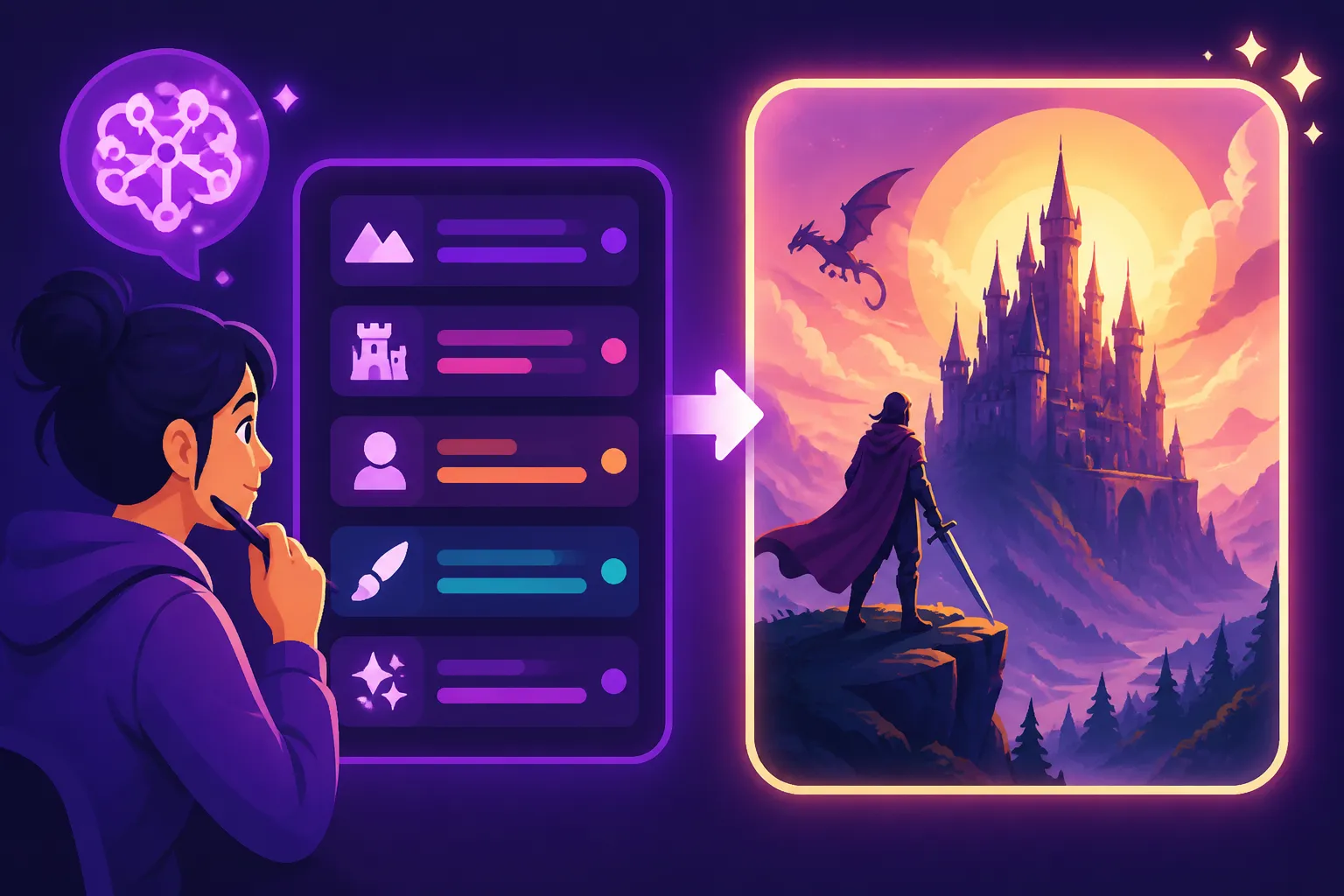
- Heroic Archetypes: Describe your characters with heroic traits and attire. "Noble knight, shining plate armor, flowing crimson cape, resolute gaze, standing defiant against a raging storm," or "wise elven sorceress, ethereal robes woven with moonlight, staff crackling with arcane energy, overlooking a valley of glowing crystals."
- Intricate Details: High fantasy often thrives on complex worlds. Mention "intricate carvings," "runic symbols," "ancient tapestries," "glowing artifacts." These add layers of depth to the scene. Think about a prompt for an ancient city: "Vast elven city, buildings grown from massive, ancient trees, interwoven with bridges of luminous moss, bathed in the soft glow of twin moons, cinematic wide shot, hyperdetailed, fantasy concept art, high resolution." This evokes a sense of wonder and historical depth. If you're struggling to nail down your prompt structure for these complex scenes, a detailed resource like Midjourney Prompt Guide, DALL-E Prompt Guide, or Stable Diffusion Prompt Guide can provide invaluable frameworks.
Dark Fantasy and Grim Realism
Dark fantasy plunges into the grittier, more somber, and often horrifying aspects of magical worlds. It's about flawed heroes, existential dread, moral ambiguity, and creatures of nightmare. Your prompts need to reflect this bleakness and visceral quality.
- Focus on Desolation and Decay: Describe "crumbling ruins," "blighted landscapes," "skeletal forests," "dank dungeons," "festering swamps." Emphasize decay, harshness, and oppressive atmospheres.
- Somber Color Palettes and Lighting: Use terms like "muted tones," "monochromatic," "deep shadows," "flickering torchlight," "moonlit gloom," "blood-red sky." Avoid bright, cheerful colors unless they're used for stark contrast.
- Monstrous and Imperfect Elements: Characters might be scarred, weary, or monstrous. Creatures are often grotesque, terrifying, or tragic. "Haggard warrior, scarred face, tattered leather armor, silhouetted against a perpetual twilight, haunted eyes," or "colossal, decaying creature, chitinous armor overgrown with fungal growths, shambling through a foggy graveyard." The realism here is often about the harshness of the world. Adding phrases like "gritty realism," "photorealistic textures," or "cinematic grimdark" can really drive the aesthetic home.
Urban Fantasy and Modern Magic
This subgenre blends the mundane reality of our world with hidden magical elements. It's about wizards living in New York City, vampires running nightclubs, or ancient prophecies unfolding in suburban streets. The challenge is making the two worlds seamlessly coexist.
- Juxtaposition is Key: Combine contemporary descriptors with fantastical ones. "Neon-lit city street, rain slicking the asphalt, a cloaked figure with glowing eyes vanishing into an alleyway, arcane symbols faintly visible on brick walls."
- Modern Settings with Magical Infusion: Take everyday locations and give them a magical twist. "Coffee shop with customers quietly reading enchanted books, subtle magical auras shimmering around patrons, steam rising from glowing mugs," or "gritty subway station, ancient runes glowing faintly on the tunnel walls, a spectral train pulling into the platform."
- Characters in Modern Attire: Your characters will likely wear contemporary clothing but possess magical accessories or powers. "Detective in a trench coat, discreetly casting a glowing protection spell, rain-soaked city backdrop, cinematic noir style." The key is to make the magic feel like a natural, if hidden, part of the modern world.
Whimsical and Fairy Tale Fantasy
This style embraces enchantment, wonder, and often a sense of innocence or charm. Think vibrant colors, adorable creatures, and settings that feel like they've sprung from a dream.
- Vibrant and Dreamlike Qualities: Use terms like "luminous," "sparkling," "enchanting," "dreamlike," "ethereal," "vibrant." The world should feel alive with gentle magic.
- Charming Creatures and Characters: "Tiny, mischievous sprites fluttering around giant glowing mushrooms," "kind-faced unicorn with a rainbow mane grazing in a flower meadow," or "young adventurer with rosy cheeks and a whimsical backpack, befriending a talking badger."
- Soft Lighting and Rich Colors: "Sun-dappled glade, soft golden light, pastel color palette," "moonlit forest where flowers glow softly, fantastical illumination," "storybook illustration style, watercolor." Avoid harshness; everything should feel gentle and inviting, even when there's a hint of danger. Consider "children's book illustration," "cute fantasy art," or "Ghibli style" to guide the AI.
Advanced Prompting Techniques for Unforgettable Fantasy Art
Once you've got the basics down, you can start exploring more advanced techniques to truly make your fantasy images stand out. This is where you move from just describing a scene to truly directing the AI's artistic output.
Using Negative Prompts to Refine Your Vision
One of the most powerful but often underutilized tools in AI image generation is the negative prompt. This is where you tell the AI what you don't want to see in your image. It’s incredibly useful for correcting common AI quirks or steering the image away from undesired elements.
For fantasy, negative prompts can be a lifesaver. Are you constantly getting images with weird, distorted hands on your characters? Add "deformed hands, ugly hands, extra fingers, missing fingers" to your negative prompt. Is your majestic dragon looking a bit too cartoony? Try "cartoon, childish, simplistic, low resolution, blurry." This technique is a game-changer for cleaning up your images and getting closer to your ideal. I find myself using "ugly, deformed, disfigured, blurry, low resolution, extra limbs, bad anatomy, grayscale, watermark, text" almost universally, then tweaking it for specific issues. It's like having an editor for your AI! Delving deeper into How to Use Negative Prompts will drastically improve your results.
Iteration and Refinement: The Path to Perfection
Very rarely will your first prompt yield a masterpiece. AI art generation is an iterative process, much like traditional art. You create, you observe, you adjust, and you try again. Don't be afraid to experiment and build on your successes.
- Small Changes, Big Impact: If you like an image but it's not quite right, try making a minor tweak to the prompt. Change a single word, adjust a lighting description, or add a specific artist's name. Sometimes, changing "glowing eyes" to "eyes glowing with inner light" can make a massive difference in nuance.
- Using Seeds and Variations: Many AI tools allow you to use a "seed" number to reproduce or create variations of a specific image. If you get an image that's almost perfect, save its seed and generate variations based on that. This lets you explore slight deviations without starting from scratch.
- Learning from Failures: Don't view "bad" results as failures. View them as data points. What about the prompt led to that result? What can you remove or add to prevent it next time? This mindset is crucial for growth. When things aren't going as planned, reading up on How to Fix Bad AI Image Results can provide excellent troubleshooting steps.
Blending Multiple Concepts and Inspirations
Some of the most unique fantasy art comes from unexpected combinations. Don't be afraid to mix and match elements from different genres, mythologies, or art styles. This is where your true creativity can shine.
- Cross-Cultural Fantasy: Combine elements from Norse mythology with Japanese folklore, or ancient Egyptian aesthetics with Celtic knotwork. Imagine "a Viking longship sailing through an aurora-lit sky, adorned with ancient Egyptian hieroglyphs." The unexpected fusion creates something novel.
- Genre Blending: What if you combine fantasy with sci-fi? "A medieval knight in shining plate armor, wielding a plasma sword, battling a cybernetic dragon amidst the ruins of a magical castle." Or fantasy with horror: "An ethereal ghost knight, riding a skeletal steed through a moonlit, haunted Victorian city."
- Combining Art Styles: "Hyperrealistic portrait of a fairy, but rendered with the brushstrokes of a classic oil painting," or "Art Deco style dragon, etched in gold and emerald, flying over a futuristic city." The juxtaposition can be incredibly visually striking. For general improvement, an AI Image Prompt Guide for Beginners often touches on these blending techniques. The goal is to generate truly unique results that feel fresh and exciting.
Leveraging Aspect Ratios and Composition
The technical aspects of an image, like its aspect ratio and composition, are just as important as its content. They dictate how the viewer experiences the scene and can drastically impact the narrative you're trying to convey.
- Aspect Ratio for Impact:
- 16:9 (Landscape): Excellent for wide, expansive fantasy vistas, battle scenes, or cityscapes. It creates a cinematic feel. Imagine a panoramic shot of an elven army marching across a vast plain.
- 9:16 (Portrait): Ideal for character portraits, towering structures, or emphasizing height and grandeur. A single, imposing wizard or a spire reaching into the clouds would benefit from this.
- 1:1 (Square): Versatile and often good for social media. Can work well for focused scenes or intricate details that don't require vast breadth or height.
Choosing the right aspect ratio frames your story effectively.
- Compositional Guidance: While AI often handles composition well, you can still guide it. Use terms like "wide shot," "close-up," "dutch angle," "rule of thirds composition," "leading lines," "centered composition." For instance, "a solitary hero, small in frame, standing before a colossal dragon, shot from a low angle to emphasize scale, wide cinematic aspect ratio." This tells the AI not just what to draw, but how to present it for maximum impact. A subtle touch, like adding "detailed, high definition" or learning How to Add Realism to AI Images can further polish the final output. Understanding these structural elements is a core part of learning How to Write AI Image Prompts.
By thoughtfully combining these elements and embracing an iterative process, you'll move beyond generic AI output and start generating truly unforgettable fantasy images that mirror the vibrant worlds in your imagination. It takes practice, but the results are incredibly rewarding.
Disclaimer
The information provided in this article is for general guidance and informational purposes only. While AI image generation tools are powerful, the results can vary significantly based on the AI model, specific prompt wording, and ongoing technological advancements. Always ensure that your use of AI-generated images complies with relevant copyright laws, terms of service for the AI platform, and ethical guidelines, especially if used for commercial purposes.