Best AI Image Prompts for Characters
It’s a truly common frustration, isn’t it? You’ve got this incredible character in your mind – a grizzled space mercenary with a cybernetic eye, perhaps, or a whimsical forest sprite adorned with dewdrop jewelry – but when you type a few descriptive words into your favorite AI image generator, what do you often get? Something… fine. But not your character. It might be a generic soldier or a cute fairy, but it lacks that spark of individuality, that unique blend of traits that makes them truly yours. This guide is here to help you break free from generic outputs and craft AI image prompts that breathe life into your unique character visions, giving them depth, personality, and visual distinction.
The Frustration of Generic AI Characters
We've all been there. You spend minutes, maybe even an hour, brainstorming the perfect hero or villain for your story, game, or even just a fun art project. You pour your heart into their backstory, their quirks, their defining features. Then you hop over to an AI image tool, type in "fantasy knight," and out pops a dozen images that look like they could be interchangeable. It’s incredibly disheartening when your creative spark hits a wall of bland, repetitive visuals.
Why AI Characters Often Look Alike
The primary reason AI-generated characters can feel so generic boils down to how these models are trained. Most powerful AI image generators learn by ingesting vast datasets of images and their corresponding text descriptions. When you type in a simple prompt like "wizard" or "elf," the AI draws from the most common, statistically prevalent representations of those concepts within its training data. Think of it like a highly efficient librarian who, when asked for "a book about dragons," hands you the most popular, archetypal dragon stories first.
This means that without explicit, detailed instructions, the AI will default to averages. If 90% of the "wizards" it's seen have long white beards, pointed hats, and staves, that's what you'll get. If "female warrior" often implies a certain body type or armor style, that's what the algorithm will lean towards. It’s not that the AI can't create unique characters; it's that you haven't given it enough specific information to deviate from the norm. It needs a roadmap to your unique vision, not just a destination.
Moving Beyond the Basic Prompt
The key to unlocking truly unique characters from your AI image generator lies in understanding that your prompt isn't just a request; it's a conversation. A basic prompt like "girl with a sword" is akin to asking a portrait artist to "draw a person." You'll get a person, certainly, but it won't be your person. To get what you truly envision, you need to provide context, details, and direction.
This isn't just about adding more adjectives; it's about adding meaningful adjectives and concepts. Instead of "girl with a sword," consider "a determined elven ranger, with braided auburn hair and forest green eyes, clad in worn leather armor etched with ancient runes, holding a glowing crystal blade, standing on a moss-covered ruin at dawn." See the difference? That's the level of detail we're aiming for. It’s about building a character piece by piece within your prompt, giving the AI distinct elements to work with rather than letting it fill in all the blanks itself. For more foundational advice, check out our guide on how to write AI image prompts.
Essential Elements of a Powerful Character Prompt
Crafting a powerful character prompt is like writing a mini character sketch. You want to give the AI enough information to build a clear, distinct visual in its digital mind. It’s a layered process, where each element adds more depth and specificity.
Defining Your Character's Core Identity
Before you even think about visuals, you need to articulate who your character is. This is the bedrock upon which all other details are built.
- Role and Archetype: Is your character a heroic knight, a cunning rogue, a wise sage, a bustling merchant, or an ethereal spirit? Starting with a clear role helps ground the AI's understanding. Be specific. Instead of just "mage," try "shadow mage" or "celestial summoner."
- Personality and Demeanor: How do they carry themselves? Are they stoic, cheerful, brooding, mischievous, ancient, or youthful? Words like "world-weary," "vibrant and energetic," "calm and serene," or "intense and focused" can dramatically influence facial expressions, posture, and even lighting.
- Background and Lore (Subtly Implied): While you can't dump an entire novel into a prompt, you can imply elements of their history or culture. "A Viking warrior, scars telling tales of many battles" immediately suggests a rugged, experienced individual. "A steampunk inventor, with grease smudges on their goggles" paints a picture of practical ingenuity. These details add a layer of realism and depth that simple descriptions miss.
Crafting Visual Details
Once you have the core identity, it’s time to dress them up, literally and figuratively. This is where you specify what they actually look like.
- Physical Appearance: This includes everything from age and gender (if specific) to ethnicity, hair color and style, eye color, and build. Don't just say "pretty"; describe how they are pretty. "Piercing emerald eyes," "a strong jawline," "tousled silver hair," "a lithe and agile build." Be mindful of common biases in AI models and if you're aiming for diversity, make sure to explicitly include those descriptors. You can even specify things like How to Prompt for Realistic Faces if facial detail is paramount.
- Clothing and Armor: This is a huge opportunity to inject personality and world-building. What materials are they wearing? Is it fine silk, rugged leather, ornate plate armor, futuristic synthetic fabric? What style is it? Is it practical, ceremonial, futuristic, rustic? Think about details like "embroidered cloak," "weathered leather bracers," "cybernetic arm with glowing circuits," "simple homespun tunic," or "ornate golden breastplate."
- Accessories and Equipment: These small details can speak volumes. Do they carry a specific weapon (e.g., "a beautifully crafted longbow," "a futuristic plasma rifle," "a gnarled wooden staff")? Do they have meaningful jewelry, bags, tools, or even pets? "An ancient amulet glowing faintly," "a utility belt filled with gadgets," "a loyal raven perched on their shoulder." Each accessory reinforces their role and story.
Setting the Scene and Mood
A character isn't just a static portrait; they exist within an environment and convey an emotion. These elements greatly enhance the overall image.
- Environment and Background: Where is your character? Are they standing in a dense magical forest, atop a futuristic skyscraper, in a bustling marketplace, or a desolate wasteland? The background provides context and can enhance the character's presence. "Standing on a windswept mountain peak," "lurking in the shadows of a cyberpunk alley," "reclining on a velvet chaise lounge in a dimly lit study."
- Lighting and Atmosphere: How is the scene lit? Is it the harsh glow of neon, the soft light of dawn, the eerie luminescence of a magic spell, or the dramatic shadows of moonlight? Lighting sets the mood and can highlight specific features. "Bathed in the golden hour light," "underneath flickering gas lamps," "illuminated by the pale light of two moons."
- Pose and Expression: What are they doing? How do they feel? "Striking a heroic pose," "contemplating thoughtfully," "a mischievous smirk," "a look of fierce determination," "sitting by a campfire, lost in thought." These details bring your character to life and tell a story within a single image. For tips on controlling composition, you might find How to Control Composition in Prompts helpful.
Here's a quick table to summarize these prompt elements:
| Prompt Element | What it Defines | Keywords/Examples |
|---|---|---|
| Core Identity | Who the character is, their role, personality | ancient wizard, stoic rogue, mischievous forest sprite, determined scientist, world-weary warrior |
| Physical Appearance | How they look (age, hair, eyes, build) | braided silver hair, piercing blue eyes, athletic build, grizzled face, youthful, ethereal appearance |
| Clothing/Armor | What they wear, style, materials | ornate plate armor, worn leather tunic, futuristic jumpsuit, flowing silk robes, patched denim jacket |
| Accessories/Gear | Items they carry, personal effects | glowing staff, cybernetic arm, ancient amulet, revolver, scrolls and quills, a loyal dog |
| Environment/Setting | Where the character is located | enchanted forest, cyberpunk cityscape, desert ruins, cozy library, starship bridge |
| Lighting/Atmosphere | Mood, time of day, light source | golden hour, dramatic shadows, ethereal glow, neon light, moonlit, foggy morning |
| Pose/Expression | What they are doing, their emotional state | heroic stance, thoughtful gaze, mischievous smirk, fierce determination, mid-action, sitting peacefully |
| Art Style | The overall aesthetic of the image | oil painting, concept art, anime style, photorealistic, pixel art, watercolor, cinematic |
Advanced Prompting Techniques for Unforgettable Characters
Once you've mastered the basics, there are even more sophisticated ways to sculpt your AI-generated characters into truly unique creations. These techniques go beyond simple descriptions and leverage the AI's artistic capabilities more fully.
Incorporating Artistic Styles and Mediums
One of the most powerful ways to define your character's visual identity is by specifying the style in which they should be rendered. This moves beyond just "what" they look like to "how" they look.
- Specific Art Movements and Artists: Think about "Art Nouveau style," "Baroque painting," "Manga illustration," or even "in the style of Alphonse Mucha" (though being too specific with copyrighted artist names can sometimes yield mixed results or ethical considerations depending on the model). The goal here is to evoke a particular aesthetic.
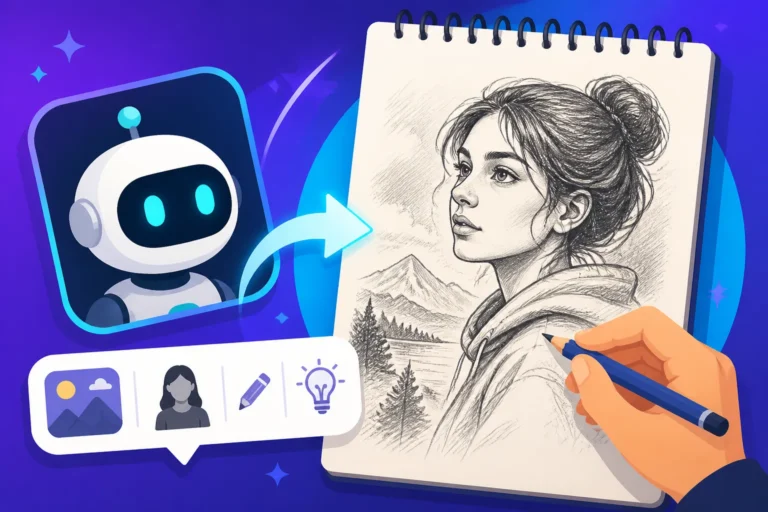
- Mediums and Textures: Describe the texture and feel of the artwork itself. "Oil painting," "digital art," "pencil sketch," "watercolor," "claymation," "3D render," "charcoal drawing." These terms significantly alter the visual outcome, adding a layer of artistic richness. For example, a character rendered as a "detailed pencil sketch" will have a vastly different feel than one as a "vibrant digital painting." Consider exploring How to Prompt for Specific Art Styles to broaden your repertoire.
- Render Quality and Realism: Terms like "hyperrealistic," "cinematic," "photorealistic," "award-winning CGI," or "dreamlike" can influence the level of detail, fidelity, and overall quality of the generated image. If you want something truly lifelike, lean into these descriptors. If you're going for something more abstract or stylized, use terms that reflect that.
Ensuring Consistency Across Multiple Images
This is a monumental challenge for many creators: generating the same character in different poses, outfits, or environments. AI models often struggle with perfect consistency, treating each prompt as a fresh start. However, there are strategies to improve your chances.
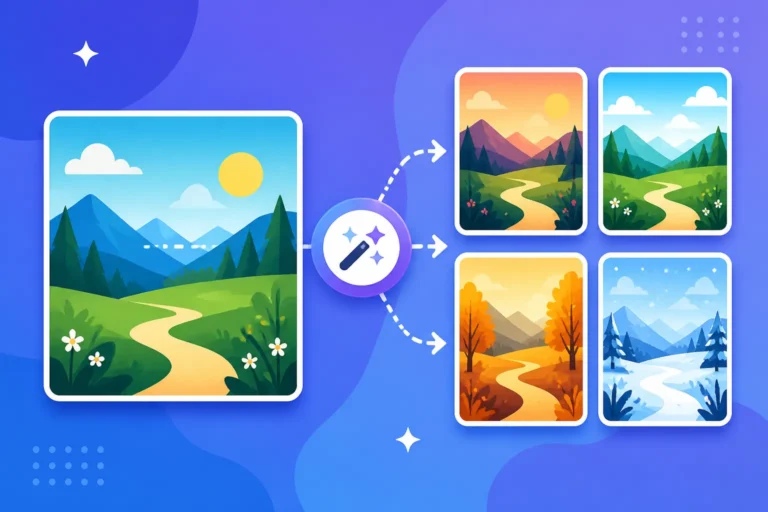
- Using Seeds: Many AI image generators offer a "seed" value. If you generate an image you like, you can often retrieve its seed number. By using the same seed along with a slightly modified prompt, you can often achieve variations of the same character. This is crucial for creating a series of images. It's a bit like cloning a perfect initial result and then subtly tweaking the DNA. For more on this, look into How to Create Image Variations.
- Detailed Reference Prompts: Keep your core descriptive elements consistent across all prompts for that character. If your character has "striking silver eyes and a scar above their left eyebrow," include that in every prompt. It might feel repetitive, but it helps the AI latch onto these defining features.
- Image-to-Image (Img2Img) or ControlNet: Some advanced AI tools allow you to start with an existing image (either a photo or a previous AI generation) and then use a prompt to modify it. This is like telling the AI, "Take this character, and now put them in that situation." ControlNet, in particular, with models like Stable Diffusion, offers incredible granular control over pose and composition using reference images. While not all tools have this, it's a game-changer for consistency.
- Character Sheets: Before you even start prompting, create a detailed "character sheet" for yourself. List every defining characteristic, from their preferred color palette to the shape of their nose. This serves as your personal guide to maintain consistency.
Leveraging Negative Prompts for Refinement
Negative prompts are just as important as positive ones, telling the AI what you don't want to see. This is incredibly useful for refining character details and avoiding common AI pitfalls.
- Fixing Distortions: AI is notorious for generating extra limbs, distorted faces, or weird hands. Common negative prompts include:
--no deformed, mutated, extra limbs, ugly, disfigured, poor anatomy, bad hands, blurry, low quality, duplicate.While not foolproof, these can significantly improve results. If you’re struggling with those infamous AI hands, specifically, search for How to Fix Extra Fingers in AI Images. - Removing Unwanted Elements: If your character keeps appearing with an unwanted object, or in a specific style you're trying to avoid, put it in the negative prompt. For example, if you're generating a medieval knight but keep getting modern elements, try
--no sci-fi, futuristic, modern technology. - Controlling Mood and Style: Negative prompts can also subtly steer the mood or aesthetic. If you want a serious character, you might use
--no smiling, joyful, childish. If you want a painterly feel, you might try--no photorealistic, CGI, renderin your negative prompt. It's about stripping away undesirable traits to leave only what you intend. Understanding How to Use Negative Prompts is a critical skill for any serious AI artist.
Real-World Examples and Prompt Breakdown
Let's put all this theory into practice with some concrete examples. Remember, these are starting points; feel free to customize and experiment! When you're ready to dive even deeper, our AI Image Prompt Guide for Beginners offers a fantastic foundation.
Fantasy Hero Example: A Stoic Paladin
Imagine a noble paladin, unwavering in their resolve, with a touch of ancient wisdom.
The Prompt:A stoic, armored paladin, male, late 30s, strong jawline, short auburn hair, and piercing grey eyes. He wears intricately crafted silver plate armor adorned with glowing celestial runes, a crimson cape flowing dramatically behind him. His hands grip a colossal, two-handed greatsword, its blade shimmering faintly. Standing on a windswept, ancient cobblestone bridge, overlooking a misty valley at dawn. Volumetric lighting, cinematic, epic fantasy art, highly detailed, octane render.
Breakdown:
- Core Identity:
stoic, armored paladin, male, late 30s– sets the character's role, demeanor, and age. - Physical Appearance:
strong jawline, short auburn hair, and piercing grey eyes– gives distinct facial features. - Clothing/Armor:
intricately crafted silver plate armor adorned with glowing celestial runes, a crimson cape flowing dramatically behind him– adds unique details and movement. - Accessories/Gear:
colossal, two-handed greatsword, its blade shimmering faintly– describes their signature weapon. - Environment/Setting:
on a windswept, ancient cobblestone bridge, overlooking a misty valley at dawn– creates a powerful, atmospheric backdrop. - Lighting/Atmosphere:
Volumetric lighting, cinematic– suggests a specific, dramatic visual mood. - Art Style:
epic fantasy art, highly detailed, octane render– defines the desired aesthetic and quality.
Sci-Fi Explorer Example: A Resourceful Space Scavenger
Let's craft a character who's seen it all in the depths of space, relying on wits and salvaged tech.
The Prompt:A resourceful, grizzled space scavenger, female, early 40s, with a patchwork leather jacket over a faded utility suit, her face framed by wild, dark hair and accented by a subtle cybernetic implant over her left eye. She carries a jury-rigged energy rifle and a backpack overflowing with salvaged tech components. She stands cautiously within the derelict, overgrown interior of a fallen alien spaceship, faint bioluminescent fungi providing an eerie glow. Gritty science fiction, realistic, concept art, high detail, atmospheric.
Breakdown:
- Core Identity:
resourceful, grizzled space scavenger, female, early 40s– establishes her role, experience, and gender. - Physical Appearance:
patchwork leather jacket over a faded utility suit, her face framed by wild, dark hair and accented by a subtle cybernetic implant over her left eye– unique and practical clothing, distinctive facial tech. - Accessories/Gear:
jury-rigged energy rifle and a backpack overflowing with salvaged tech components– highlights her tools and profession. - Environment/Setting:
cautiously within the derelict, overgrown interior of a fallen alien spaceship– immersive, intriguing location. - Lighting/Atmosphere:
faint bioluminescent fungi providing an eerie glow– specific, atmospheric lighting. - Art Style:
Gritty science fiction, realistic, concept art, high detail, atmospheric– desired genre, realism level, and artistic approach.
Modern Day Professional Example: A Tech Entrepreneur
Not all characters need to be fantastical. AI can excel at realistic, contemporary individuals too.
The Prompt:A confident and innovative tech entrepreneur, male, late 20s, with stylish short hair, sharp intelligent eyes, and a neatly trimmed beard. He wears a tailored smart-casual blazer over a minimalist t-shirt, a high-end smartwatch on his wrist. He is standing in a sleek, modern co-working space with large windows overlooking a bustling downtown city at dusk. Soft, indirect studio lighting, editorial photography style, crisp, sharp focus, professional.
Breakdown:
- Core Identity:
confident and innovative tech entrepreneur, male, late 20s– his profession, demeanor, and age. - Physical Appearance:
stylish short hair, sharp intelligent eyes, and a neatly trimmed beard– modern, professional appearance. - Clothing/Armor:
tailored smart-casual blazer over a minimalist t-shirt, a high-end smartwatch on his wrist– contemporary, professional attire and accessory. - Environment/Setting:
sleek, modern co-working space with large windows overlooking a bustling downtown city at dusk– a fitting, realistic urban environment. - Lighting/Atmosphere:
Soft, indirect studio lighting– professional, flattering illumination. - Art Style:
editorial photography style, crisp, sharp focus, professional– desired photographic aesthetic.
Remember, the more specific and descriptive you are, the better. Don't be afraid to experiment with different adjectives, synonyms, and even the order of your words. Sometimes a slight rephrasing can unlock a whole new level of detail from the AI. If you're encountering issues, don't forget to review How to Fix Bad AI Image Results for general troubleshooting tips.
Disclaimer
Please be aware that while this guide provides extensive information on crafting effective AI image prompts for characters, the capabilities and outputs of AI image generation tools are constantly evolving. Results may vary significantly between different platforms and models. Always use these tools responsibly and consider ethical implications, especially regarding copyrighted styles or likenesses.