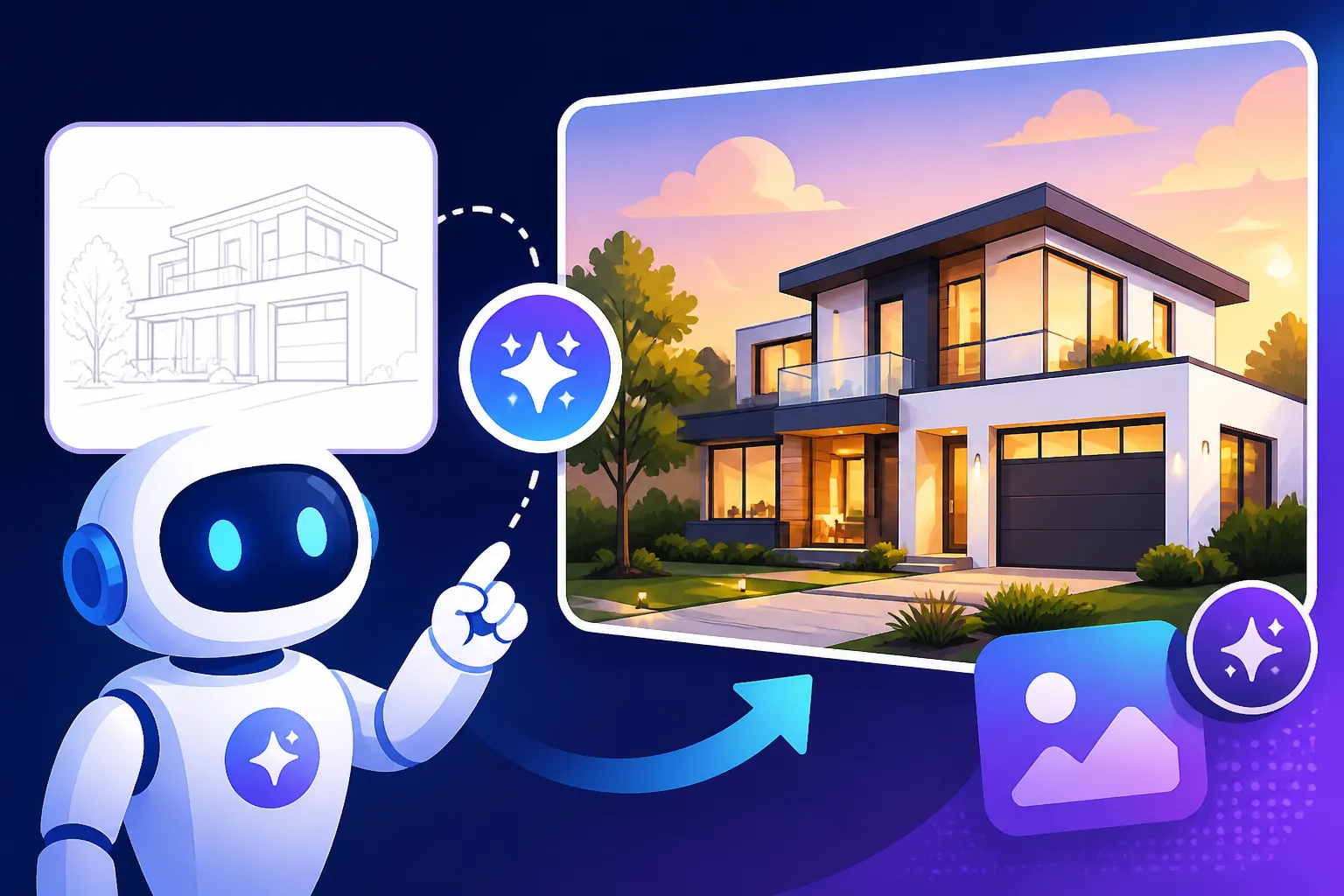
How to Use AI Images for Real Estate
Let's be honest, in the competitive world of real estate, captivating visuals aren't just a nice-to-have; they're an absolute necessity. But the reality is, professional photography can be expensive, scheduling shoots for empty homes is a logistical nightmare, and creating eye-catching marketing materials from scratch eats up valuable time. This guide is all about showing you how AI image generation can step in as your invaluable design assistant, transforming your property marketing and saving you both time and money.
Enhancing Property Listings with AI-Generated Visuals
One of the biggest hurdles in real estate is making every property shine, regardless of its current state. Whether you're dealing with a fixer-upper, a vacant space, or a concept for a future build, AI images offer an incredible advantage, allowing you to present properties in their best light without the traditional costs and effort. It's about giving potential buyers a glimpse of what could be, igniting their imagination and fostering a deeper connection with a property before they even step foot inside.
Creating Stunning Exterior Renders from Basic Photos
Imagine you have a listing with a perfectly good house, but the yard is a bit overgrown, the paint is peeling, or perhaps it's a new construction lot that's still just dirt. Traditional staging or landscaping would be a massive investment, not to mention time-consuming. This is where AI truly shines. You can take a basic smartphone photo of the property's exterior or even a vacant lot and use AI to generate breathtaking renders. Think of it: you could transform a dull, rainy-day photo into a sun-drenched afternoon scene with lush landscaping, a freshly painted exterior, and even a sparkling clean driveway.
This isn't just about making things look pretty; it's about showcasing potential. For instance, if you're marketing a home in a temperate climate, you could generate images showing it with vibrant spring flowers, golden autumn leaves, or even a tastefully decorated exterior for the holidays. For properties that need a facade update, AI can visualize different paint colors, roofing materials, or even the addition of a charming porch. It eliminates the need for expensive architectural renderings for minor changes and provides a powerful visual aid for buyers who struggle to see beyond the present condition.
Staging Empty Rooms Virtually with AI
Empty rooms can feel cold, uninviting, and smaller than they actually are. It's a well-known fact that staged homes sell faster and often for more money. However, physical home staging comes with a hefty price tag, not just for the furniture rental but also for transportation, setup, and removal. This is precisely where AI-powered virtual staging becomes a game-changer for real estate agents and homeowners alike. You can upload a photo of a bare living room, an empty bedroom, or a sterile kitchen, and within moments, the AI can populate it with stylish furniture, decor, and even realistic lighting, making it feel warm, lived-in, and aspirational.
The beauty of virtual staging with AI is its versatility. You're not limited to one style; you can generate multiple options. For example, a single bedroom photo could be virtually staged in a minimalist Scandinavian style, a cozy farmhouse aesthetic, or a sleek modern design, appealing to a wider range of potential buyers. This also allows you to highlight the functionality of a space – showing how a corner could become a home office or a large wall could accommodate a media center. This capability dramatically expands your marketing toolkit, enabling you to present every space with purpose and appeal, without ever moving a single piece of furniture. If you're wondering about the cost-effectiveness, remember that generating an AI image is often a fraction of the price of physical staging, or even a paid virtual staging service. For more ideas, explore how to use AI for images on your property listings.
Generating "Before & After" Renovation Concepts
For properties that are clear renovation projects, helping buyers envision the transformation is crucial. It’s hard for many people to look past outdated decor, worn-out fixtures, or awkward layouts. AI image generators can be an incredible tool for creating compelling "before & after" scenarios, demonstrating a property's hidden potential. Instead of just talking about renovating the kitchen, you can show what it could look like with new cabinetry, a modern island, and updated appliances, all while maintaining the home's original charm.
You could take a photo of an old, cramped bathroom and generate an AI image showing a spacious, spa-like retreat. Or, for a property with an unfinished basement, AI can depict it as a vibrant family room, a home theater, or even an income-generating apartment. This feature is particularly powerful for investors or buyers looking for a project, as it helps them quantify the vision and understand the scope of work in a tangible way. It bridges the gap between the current reality and the future possibility, turning what might seem like a drawback into an exciting opportunity, helping you to truly market a property's future value.
Streamlining Marketing and Design Workflows
Beyond just property listings, the real estate business demands a constant flow of marketing materials, from social media posts to open house signs. Traditionally, this means either hiring a graphic designer, spending hours learning complex software, or settling for generic templates. AI image generators can significantly streamline these design workflows, empowering real estate professionals to create high-quality, customized visuals quickly and affordably. It’s about being agile and responsive in your marketing, ensuring your brand and listings always look polished and professional.
Designing Eye-Catching Social Media Graphics and Ads
Social media is a powerhouse for real estate, but cutting through the noise requires visuals that instantly grab attention. Manually designing graphics for Instagram, Facebook, or even TikTok can be incredibly time-consuming, especially when you need multiple variations for different campaigns or A/B testing. AI image generators can revolutionize this process, allowing you to whip up stunning, on-brand graphics in minutes. You can specify themes, color palettes, and even the emotional tone you want to convey.
Imagine needing a series of posts to promote an open house in San Diego. You could generate images of the property set against a backdrop of a perfect sunset, or lifestyle images depicting people enjoying nearby beaches, all designed to resonate with local buyers. For ad campaigns, you can easily create variations with different headlines or calls to action, such as "Dream Home Awaits" or "Invest in Your Future," directly on the image if the AI tool supports text generation, a feature where tools like Ideogram shine. This capability means you can keep your social feeds fresh, engaging, and highly targeted without needing a dedicated design team. Looking for tips? Check out our guide on how to make AI social media graphics.
Crafting Engaging Flyers, Brochures, and Open House Materials
Physical marketing materials still hold immense value, especially for open houses, community events, and direct mail campaigns. The tactile experience of a well-designed flyer or brochure can leave a lasting impression. However, custom designs often come with high costs or require graphic design expertise. AI image generation can significantly reduce this barrier, enabling you to create professional, cohesive, and brand-aligned materials with ease. You can generate bespoke backgrounds, lifestyle images, or even stylized icons that perfectly complement your brand and the property's aesthetic.
Consider a luxury property listing: you can generate sophisticated, minimalist imagery for a brochure, featuring elegant interior shots or abstract architectural elements that convey exclusivity. For a family-friendly home, you might create vibrant, warm images for flyers, showing happy families in parks or children playing in spacious backyards. The key is consistency and quality. By using AI to create unique visual assets, your flyers, brochures, and "For Sale" signs will stand out, reflecting a high level of professionalism and attention to detail that buyers appreciate. You can even use these tools to generate compelling imagery for blog posts or articles about the neighborhood.
Visualizing Future Developments and Community Amenities
Selling properties that are part of new developments, or even just highlighting community amenities like parks, schools, or local businesses, can be challenging without high-quality visuals. Often, these elements are still under construction or require complex photography permits. AI image generators provide an invaluable solution by creating realistic visualizations of these future states or generic yet appealing representations of community features. This allows potential buyers to see not just the house, but the entire lifestyle they're buying into.
For example, if a new park or shopping center is being built nearby, you can use AI to generate an inviting image of the finished park, complete with families enjoying a sunny afternoon, or a bustling, modern shopping district. If you're selling units in a condominium that's not yet built, AI can render common areas like the lobby, gym, or rooftop terrace based on architectural plans, giving buyers a concrete vision of the finished product. This ability to depict future realities and abstract concepts with vivid imagery adds immense value to your marketing efforts, helping buyers feel more confident and excited about their investment.
Practical Tips for Integrating AI Images into Your Real Estate Business
Integrating any new technology into your workflow can feel daunting, but with AI image generation, the benefits far outweigh the learning curve. To truly leverage these tools effectively in real estate, it's not just about clicking a button; it's about making informed choices, crafting precise instructions, and understanding the implications of using AI-generated content. Mastering these aspects will ensure your AI images are not only visually appealing but also strategically valuable.
Choosing the Right AI Image Tool for Real Estate Needs
With so many AI image generators available today, selecting the right one can feel like navigating a maze. Each tool has its strengths, whether it's photorealism, artistic styles, or text rendering capabilities. For real estate, your primary concern will likely be generating realistic, high-quality images that accurately represent properties or potential scenarios, while also offering commercial use rights. Consider tools that excel in photorealism and allow for detailed control over lighting, perspective, and architectural elements.
Some popular options like Midjourney are renowned for their artistic quality and can create stunning, photorealistic scenes, though they might require a bit more finesse with prompts. DALL-E, especially through platforms like ChatGPT, is becoming increasingly user-friendly and capable of generating diverse images. For commercial use, you'll want to investigate tools like Adobe Firefly, which often provides indemnity for commercial applications, offering peace of mind. Leonardo AI also offers strong control and various models suitable for architectural visualization. Evaluate factors like ease of use, cost, and the ability to generate images at the resolution you need for both digital and print. Before diving deep, it might be worth checking out a "Best AI Image Generator for Commercial Use" comparison or a detailed review like a Leonardo AI Review.
| Feature / Tool Aspect | Photorealism | Ease of Use | Text Rendering | Commercial Use Policy | Ideal For |
|---|---|---|---|---|---|
| High Realism | Excellent | Moderate | Fair | Varies by platform | Property exteriors, virtual staging |
| User-Friendly | Good | High | Good | Varies by platform | Social media, quick concepts |
| Text on Images | Fair | Moderate | Excellent | Varies by platform | Flyers, branding, specific labels |
| Control & Customization | Excellent | Moderate | Fair | Varies by platform | Detailed renders, specific styles |
Crafting Effective Prompts for Realistic Property Images
The quality of your AI-generated image directly correlates with the quality of your prompt. It's like talking to a highly skilled, but literal, artist. You need to be specific, descriptive, and clear about your vision. For real estate, this means including details about the property type, architectural style, lighting, time of day, weather, and even the emotional atmosphere you want to convey. Don't just say "house"; say "a modern farmhouse with white siding and black trim, large windows, on a sunny afternoon."
Beyond the basics, think about camera angles ("drone shot," "eye-level"), interior design styles ("minimalist Scandinavian living room," "rustic kitchen with exposed beams"), and even the presence of subtle elements ("a potted plant on the coffee table," "warm glow from the fireplace"). Negative prompts are also incredibly useful for real estate, allowing you to exclude undesirable elements like "clutter," "worn furniture," or "rainy weather." Experimentation is key, and you'll quickly learn which keywords yield the best results for the specific look and feel you're going for. Consider reading "How to Write AI Image Prompts" for a deeper dive into prompt engineering.
Legal and Ethical Considerations for AI in Real Estate
As with any emerging technology, using AI images in real estate comes with important legal and ethical considerations that you absolutely cannot overlook. First and foremost are copyright and commercial use rights. While many AI image generators allow commercial use, their terms can vary, and some may not offer indemnification if an AI-generated image accidentally infringes on existing copyrighted material. Always review the terms of service for any AI tool you use, especially if you plan to use the images for marketing or sales. It's crucial to understand How to Make AI Images Commercially Safe.
Ethically, transparency is paramount. While AI virtual staging can be incredibly helpful, it's generally best practice to disclose that images are "virtually staged" or "AI-generated" when they deviate significantly from the property's current physical state. Misleading buyers, even unintentionally, can lead to distrust or even legal issues down the line. For example, generating a sunny day for a house that's perpetually in shadow might be an overstep. Always aim to enhance reality, not misrepresent it. Your goal is to inspire and inform, not deceive. Being upfront builds trust, which is invaluable in real estate.
Disclaimer
The information provided in this article is for general guidance and informational purposes only, and does not constitute professional advice. While AI image generation tools offer exciting possibilities, their capabilities, legal implications, and ethical guidelines are constantly evolving. Always consult with legal professionals and review the terms of service of any AI tool before using AI-generated images for commercial purposes or property marketing.