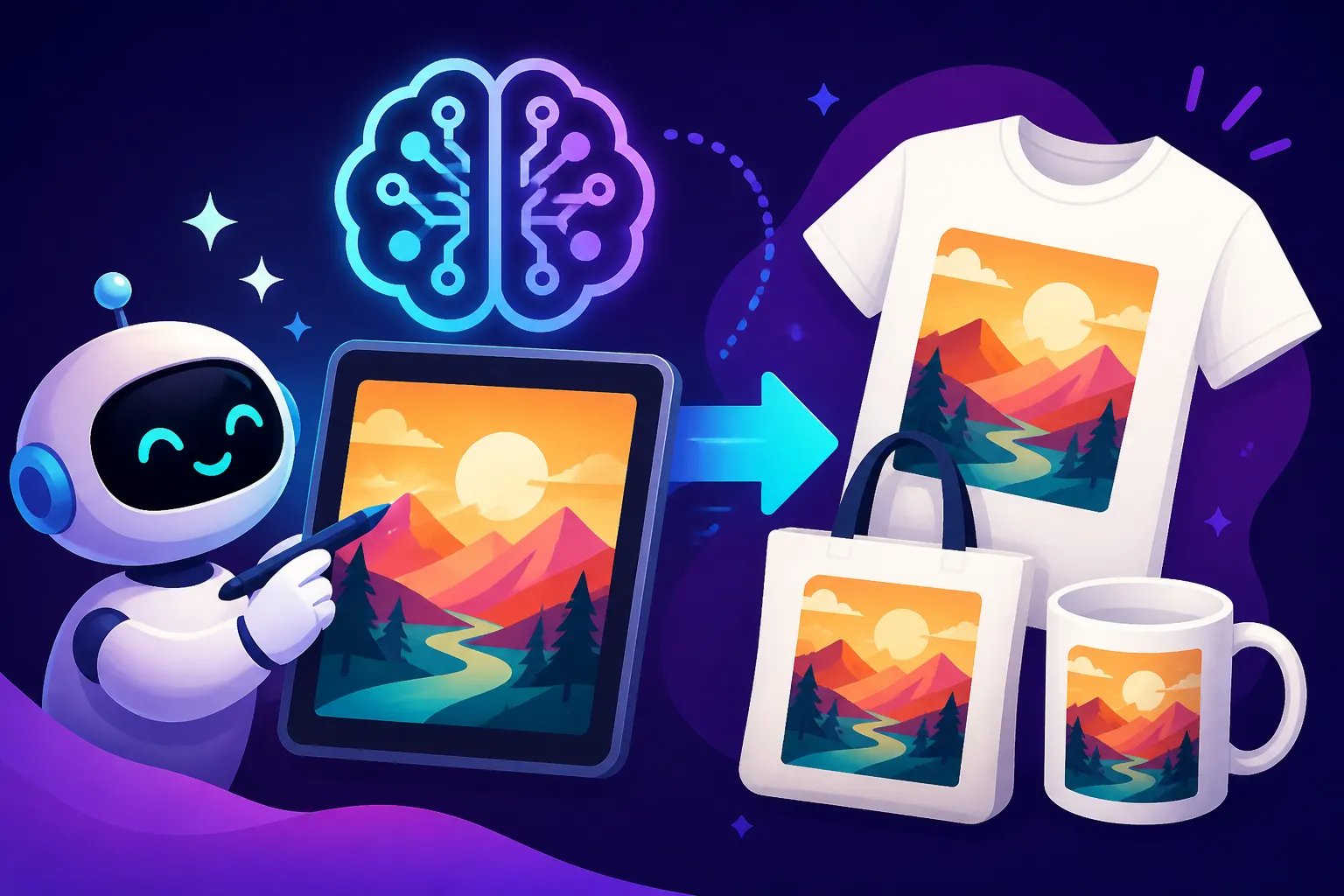
AI Images for Print on Demand
Many print-on-demand (POD) entrepreneurs and aspiring creators often hit a wall when it comes to consistently generating fresh, high-quality designs. The constant pressure to stand out in a crowded market, coupled with the time and skill required for traditional design, can be incredibly frustrating. This guide is here to show you how AI image generators can become your most powerful design assistant, helping you effortlessly create unique visuals for your print-on-demand products, from t-shirts to mugs and everything in between.
The Print-on-Demand Landscape and Its Design Challenges
The world of print-on-demand is incredibly exciting, offering a low-risk way for creators to turn their ideas into tangible products without needing to manage inventory. Platforms like Etsy, Redbubble, Teespring, and Printful have made it accessible for anyone to launch their own branded merchandise. However, this accessibility also means fierce competition, and one of the biggest hurdles is consistently producing compelling designs that resonate with buyers.
The Demand for Unique, Scalable Designs
Think about walking through a busy marketplace, whether online or offline. What catches your eye? It’s usually something fresh, something that speaks directly to a niche interest, or something that simply looks incredibly well-designed. In the POD space, uniqueness is currency. Customers are constantly looking for designs that reflect their personality, hobbies, or inside jokes. They don't just want a cat t-shirt; they want the cat t-shirt that perfectly captures their quirky feline's personality.
The challenge intensifies because once you find a successful design, you often need to scale that success. This might mean adapting it for different product types, creating variations for slightly different audiences, or simply producing a steady stream of new designs to maintain interest. Manually generating dozens or hundreds of distinct designs, especially across various styles and themes, can be an immense undertaking, quickly eating into profit margins and creative energy. The market evolves rapidly, with trends appearing and fading almost overnight, demanding an agile approach to design creation that traditional methods often can't match.
Traditional Design Bottlenecks for POD Creators
Before the advent of powerful AI tools, creating designs for print-on-demand typically involved one of two paths: either you were a skilled graphic designer yourself, or you outsourced the work. Both options come with their own set of significant challenges that can slow down growth and drain resources.
If you’re doing it yourself, you face the creative block. We’ve all been there: staring at a blank canvas, unsure of where to start, or struggling to translate a vague idea into a concrete visual. Even skilled designers can spend hours on a single concept, only for it not to quite hit the mark. Then there's the technical skill required: mastering software like Adobe Photoshop or Illustrator, understanding typography, color theory, and composition. It’s a steep learning curve, and many aspiring POD entrepreneurs simply don't have the time or inclination to become design maestros overnight.
Outsourcing, while seemingly simpler, brings its own complexities. Hiring freelance designers can be expensive, especially for custom, high-quality work. You might pay anywhere from $50 to several hundred dollars per design, making it costly to test many ideas. Communication can be a challenge, too; conveying your vision accurately to someone else and going through multiple rounds of revisions eats up valuable time and can lead to frustration if the final output isn't quite what you envisioned. Moreover, finding designers who specialize in the exact niche or aesthetic you’re targeting can be a whole project in itself.
How AI Image Generators Transform Print-on-Demand Design
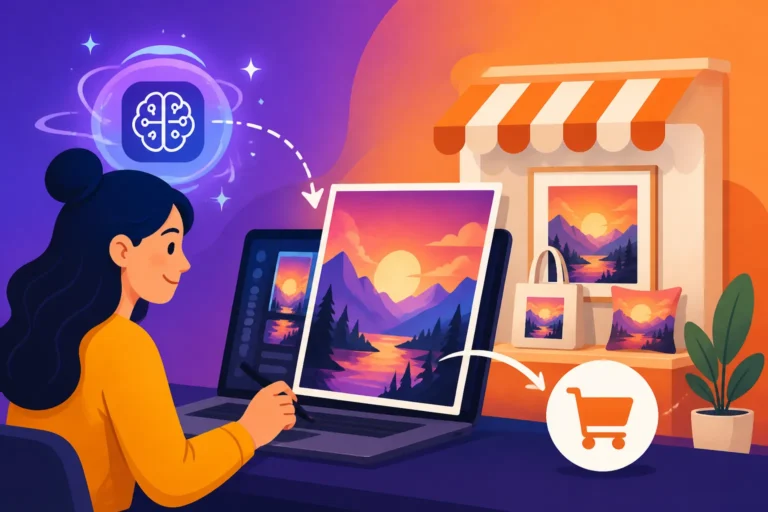
The rise of artificial intelligence in content creation has been a game-changer, and nowhere is this more evident than in visual design for industries like print-on-demand. AI image generators aren't just a novelty; they are powerful tools that fundamentally change how designs are conceived, created, and scaled. They offer a direct solution to many of the frustrations faced by POD sellers, making design more accessible, faster, and more versatile than ever before.
Rapid Prototyping and Idea Generation
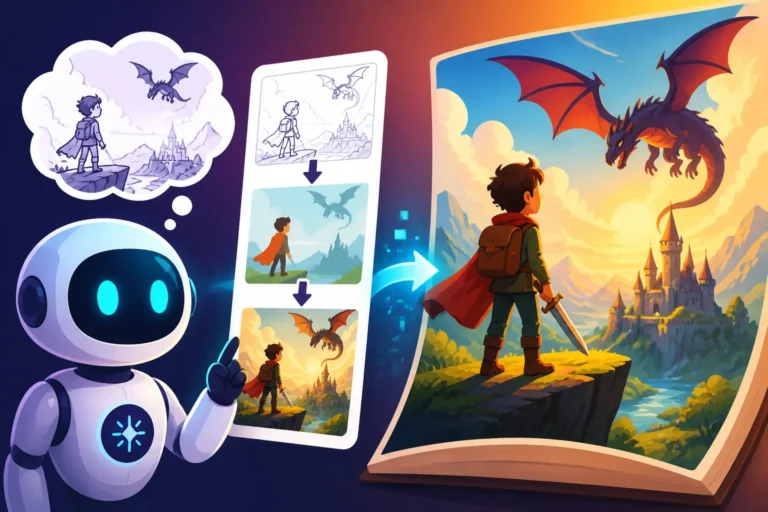
One of the most significant advantages of AI image generators for print-on-demand is their ability to rapidly prototype design ideas. Imagine having a vague concept for a new t-shirt design – perhaps "a whimsical cat riding a skateboard through space." Instead of sketching for hours or trying to find existing stock art, you can simply type that prompt into an AI tool. Within seconds, you'll have multiple visual interpretations, allowing you to see your idea brought to life in various styles, compositions, and color palettes.
This speed of iteration is revolutionary. You can generate dozens, even hundreds, of design concepts in the time it would take a human designer to create one. This means you can explore niche markets more efficiently, test out wildly different aesthetics, and quickly discard ideas that don't quite work. For example, if you're exploring designs for "vintage camping gear," you could generate images of retro campers, distressed logos, and scenic forest views in minutes, helping you pinpoint the exact visual language that resonates with your target audience. This process isn't just about generating final images; it’s about refining your creative vision through rapid experimentation.
Overcoming Creative Blocks with AI Prompts
Every creative person, from seasoned artists to new entrepreneurs, experiences creative blocks. It’s that moment when your mind feels utterly blank, or you're stuck in a rut, generating the same old ideas. AI image generators act as an incredible creative partner, capable of sparking new inspiration when you need it most. By simply playing with different keywords, adjectives, and artistic styles in your prompts, you can explore avenues you might never have considered.
Let's say you need a design for a coffee mug. Instead of just "coffee cup," you could try "steampunk coffee cup," "minimalist coffee cup with abstract lines," "coffee cup surrounded by enchanted forest creatures," or "a vintage coffee advertisement poster from the 1950s." Each prompt will yield a distinct set of visuals, pushing your imagination in new directions. The AI doesn't judge; it just generates. This freedom to experiment without commitment helps break through mental barriers, allowing you to discover truly innovative and unique aesthetics for your products. You can even combine disparate concepts, like "cyberpunk sushi chef" or "Victorian astronaut," to create entirely novel and attention-grabbing designs. To learn more about unlocking this potential, you might want to check out our guide on How to Write AI Image Prompts.
Expanding Design Capabilities Without Specialized Skills
Perhaps one of the most democratizing aspects of AI image generators is their ability to empower individuals without traditional design training. You no longer need to spend years mastering complex software or understanding intricate design principles to create visually appealing graphics. If you have a clear idea and can articulate it in words, an AI can often translate that into an image.
This means a small business owner focusing on artisanal soaps can create beautiful product labels and marketing graphics without hiring a designer. A blogger can generate eye-catching visuals for their articles without knowing the first thing about graphic design. For POD, this translates into unprecedented freedom. You can bring your wildest ideas to life, produce a professional-looking design for a t-shirt or poster, and even explore different artistic styles like pixel art, watercolor, or photorealism, all with minimal effort. This significantly lowers the barrier to entry, allowing more people to participate in the creative economy and launch successful print-on-demand ventures based on their unique vision rather than their technical design prowess. It truly levels the playing field, making high-quality design accessible to everyone.
Key AI Image Generators for Print-on-Demand
Choosing the right AI image generator can feel overwhelming given the growing number of options available today. Each tool has its unique strengths, user interfaces, and pricing structures. For print-on-demand, the ideal tool often depends on the specific aesthetic you're going for, your comfort level with prompt engineering, and your budget. Let's dive into some of the most popular and effective options for POD creators.
Midjourney and Its Artistic Prowess
When it comes to generating stunning, highly artistic, and often surreal images, Midjourney frequently tops the list. It's renowned for its ability to produce visuals with an almost painterly quality, rich textures, and dramatic lighting. Many users find its output to be exceptionally high-fidelity, pushing the boundaries of what AI can create in terms of sheer artistic flair. For POD creators looking to sell art prints, abstract designs, or merchandise with a strong stylistic identity, Midjourney is a powerful contender. Its images often have a distinct aesthetic that can help a brand stand out.
However, Midjourney typically operates within a Discord server, which can be a different experience for those used to web-based applications. While it's becoming more user-friendly with web interfaces, mastering its nuances, parameters, and blend modes takes some practice. You might find yourself experimenting with various aspects, like --stylize or --chaos, to truly fine-tune the output to your vision. It excels at creating imaginative scenes, fantasy landscapes, character designs, and abstract patterns. If you're designing for a niche that values artistic expression and unique visual narratives, Midjourney can be incredibly rewarding. Consider diving deeper with a guide like Midjourney Review: Features, Pricing, and Quality to fully understand its capabilities.
DALL-E and User-Friendly Accessibility
DALL-E, especially its integration within platforms like ChatGPT, is often praised for its ease of use and ability to generate a wide range of images from straightforward text prompts. It's an excellent choice for creators who prioritize simplicity and directness, particularly those who are newer to AI art generation. DALL-E excels at conceptual designs, realistic depictions, and images that need to clearly convey a specific object or scene. Its strength lies in its intuitive interface and its ability to quickly produce multiple variations based on a single prompt, allowing for rapid selection and iteration.
For print-on-demand, DALL-E is fantastic for generating quick mockups, simple illustrations, or designs where clarity and recognition are key. If you need a design featuring a specific type of animal, an everyday object, or a clear graphic for a t-shirt, DALL-E can deliver effectively. It’s also particularly useful if you’re already using ChatGPT for other aspects of your business, as the integrated experience streamlines your workflow. While it might not always achieve the highly stylized, fine-art look of Midjourney, its practicality and user-friendliness make it a strong option for many POD applications, especially those requiring precise object rendering or quick concept validation. For a detailed look at its functionality, explore our DALL-E Review: Is It Worth It.
Stable Diffusion for Customization and Control
Stable Diffusion stands out for its open-source nature and the unparalleled level of control it offers, making it a favorite among more technically inclined users and those who need very specific outcomes. Unlike proprietary models, Stable Diffusion can be run locally on your own computer (if you have sufficient hardware) or accessed through various web-based interfaces and services that build upon its core technology. This open-source ecosystem means a vast community contributes to models, extensions, and workflows, allowing for incredible customization.
For print-on-demand, Stable Diffusion’s strength lies in its adaptability. You can fine-tune models to generate images in a highly consistent style, create specific types of characters, or even train it on your own existing designs to maintain brand consistency. Tools like ControlNet allow for precise control over composition, pose, and depth, meaning you can guide the AI much more accurately than with many other platforms. This is invaluable if you need a series of designs with a recurring element or a specific layout, like a logo with a unique texture applied consistently. While it has a steeper learning curve, the rewards are immense for creators who want to push boundaries and have granular control over their output. You can dive deeper into its capabilities by reading our Stable Diffusion Review: Free and Customizable.
Ideogram for Text and Typography Designs
A persistent challenge with many AI image generators has been their struggle with rendering coherent and correctly spelled text within images. This is where Ideogram truly shines and becomes an indispensable tool for print-on-demand, especially for products that heavily rely on slogans, quotes, or branded text. T-shirts, mugs, posters, and greeting cards often feature text as their primary design element, and Ideogram has proven itself remarkably capable of handling typography with accuracy.
Ideogram's developers have clearly prioritized text generation, allowing users to reliably include phrases, mottos, and brand names directly into their designs without the common "gibberish" or misspelled words that plague other tools. This capability dramatically reduces the need for post-processing in graphic design software just to add legible text, saving immense time and effort. If your POD business revolves around witty sayings, personalized messages, or unique literary designs, Ideogram should be at the top of your list. Its ability to integrate text seamlessly and stylishly within a visual composition is a game-changer for many types of merchandise. To truly understand its text-rendering capabilities, check out our Ideogram Review: Best for Text in Images.
Here's a quick comparison of these powerful AI tools for print-on-demand:
| AI Tool | Primary Strength | Ease of Use | Text Handling | Commercial License Clarity | Best for POD Designs |
|---|---|---|---|---|---|
| Midjourney | Artistic, imaginative, high-fidelity | Moderate to Advanced | Poor (often garbled) | Good (Paid plans) | Artistic prints, abstract patterns, highly stylized merch |
| DALL-E | User-friendly, conceptual, versatile | Easy | Fair (improving) | Good (Varies with platform) | Simple illustrations, quick mockups, clear object rendering |
| Stable Diffusion | Customization, control, open-source | Advanced | Variable (depends on model) | Varies (check specific model) | Niche-specific art, consistent styles, advanced manipulation |
| Ideogram | Exceptional text and typography | Easy to Moderate | Excellent | Good (Paid plans) | Slogan tees, quote mugs, posters with legible text |
| Adobe Firefly | Commercial safety, integration | Easy | Good | Excellent (Indemnification) | Commercial projects, designs needing specific assets |
| Leonardo AI | Game assets, diverse models | Moderate | Fair | Good (Paid plans) | Gaming merch, character concepts, textured designs |
(Note: Commercial license clarity can vary based on specific plan tiers and evolving terms of service for each platform. Always refer to the latest TOS.)
Practical Steps to Integrate AI into Your POD Workflow
Integrating AI image generators into your print-on-demand business isn't just about playing with new tools; it's about establishing a streamlined process that maximizes efficiency and creative output. To truly leverage the power of AI, you need to understand how to prompt effectively, prepare your images for print, and navigate the commercial aspects responsibly.
Crafting Effective Prompts for POD Products
The quality of your AI-generated images is directly tied to the quality of your prompts. Think of a prompt as a conversation with a highly intelligent, albeit literal, artist. The more descriptive, clear, and specific you are, the better the results. For print-on-demand, this means going beyond just describing the subject. You need to consider the end product and its purpose.
Start with the core subject: "A majestic lion." Then, add details about the style: "in the style of a vintage watercolor painting," or "as a minimalist vector graphic." Consider the mood: "serene and calm," or "fierce and dynamic." Don't forget the context: "suitable for a children's book cover," or "designed for a dark-colored t-shirt." For text-heavy designs (which Ideogram excels at), clearly state the exact text you want: "T-shirt design that says 'Coffee First, Then Conquer' in a retro font." Specifying aspect ratios can also be crucial; for instance, a square design for an Instagram post might differ from a rectangular one for a poster. Experiment with adding keywords like "high resolution," "print-ready," or "transparent background" if the AI tool supports these directives. A well-structured prompt, like "vintage surfer riding a huge wave, vibrant sunset, retro travel poster style, high detail, for t-shirt design, 300dpi," will yield far better results than a vague "surfer art." Our comprehensive guide on How to Write AI Image Prompts is a great resource for mastering this skill.
Refining and Upscaling AI-Generated Images
While AI image generators are incredibly powerful, they don't always produce print-ready files right out of the gate. The raw output, especially from free tiers or initial generations, might be too low resolution, contain minor imperfections, or have slightly off-kilter details that need finessing. This is where refining and upscaling become critical steps in your POD workflow.
For print-on-demand, your designs need to be high resolution (typically 300 DPI for sharp prints) and of sufficient pixel dimensions to avoid pixelation on larger products like posters or blankets. Many AI tools generate images at web-friendly resolutions, so you'll often need to use an AI upscaler. Tools like Magnific AI, Gigapixel AI, or even built-in upscaling features within some AI generators (like Midjourney's upscale options) can significantly increase resolution while adding detail, making your image suitable for print. Beyond resolution, closely examine your generated images for common AI quirks: distorted hands or faces, strange artifacts, or areas that just look "off." Basic graphic design software like Canva, Affinity Designer, or even free online editors can be used for minor touch-ups, color correction, background removal, or adding your brand logo. Think of the AI as your initial creative burst, and post-processing as the crucial step that turns a great idea into a polished, sellable product. Learning How to Upscale AI Images is a valuable skill for any POD creator.
Understanding Commercial Use and Licensing
This is perhaps one of the most critical, yet often overlooked, aspects of using AI images for print-on-demand. Just because you generated an image with AI doesn't automatically mean you have unlimited rights to sell it commercially. The landscape of AI image licensing is still evolving, but generally, here's what you need to know:
First, always read the Terms of Service (TOS) for each AI image generator you use. These documents explicitly state what you can and cannot do with the generated images. Most paid plans for popular tools like Midjourney, DALL-E, Ideogram, and Adobe Firefly grant commercial usage rights. However, free tiers might have more restrictive licenses, sometimes prohibiting commercial use or requiring attribution. For instance, some free versions might only allow personal use or might impose watermarks.
Second, be aware of intellectual property and copyright issues. While AI-generated images are generally considered "new" creations, there's ongoing debate and legal scrutiny regarding the datasets used to train these AIs. Some argue that if the AI was trained on copyrighted material without proper licensing, its output might implicitly carry similar issues. For maximum safety, look for AI tools that offer IP indemnification, such as Adobe Firefly, which provides legal protection against copyright claims for images generated within its platform. This is a significant advantage for businesses concerned about legal exposure.
Finally, consider originality and derivative work. If you prompt an AI to create an image "in the style of Van Gogh," while the output might not be a direct copy, it leans heavily on an existing artistic identity. While stylistic inspiration is common in art, it's wise to strive for unique aesthetics that clearly originate from your own creative prompts to minimize any potential issues. It's crucial to stay informed about these developments, as legal precedents are still being set. For a deeper dive into the legalities, researching topics like Adobe Firefly Commercial Safety Review can be highly beneficial.
Maximizing Your Print-on-Demand Success with AI
Simply generating a few designs with AI is just the beginning. To truly revolutionize your print-on-demand business, you need to think strategically about how AI can enhance every stage of your product lifecycle, from initial concept to ongoing market saturation. AI isn't just a design tool; it's a powerful accelerator for your entire creative and commercial process.
Niche Exploration and Market Trend Spotting
One of the most time-consuming aspects of running a successful POD business is identifying profitable niches and staying ahead of market trends. AI image generators can significantly speed up this research and validation phase. Instead of spending hours scouring trend reports or analyzing competitors, you can use AI to quickly visualize concepts for emerging interests.
For instance, if you notice a growing interest in "cottagecore aesthetics" or "retro gaming culture," you can immediately generate a wide array of visual interpretations. Prompt the AI for "cottagecore mushroom village illustration" or "8-bit pixel art space invaders t-shirt design." The sheer speed of generation allows you to prototype designs for dozens of niches in a fraction of the time it would take with traditional methods. You can then quickly gauge customer interest by creating mockups and running small ad campaigns or even simply posting them on social media. This iterative, AI-powered approach allows you to "fail fast" with design concepts that don't resonate, and quickly double down on those that show promise, ensuring your inventory is always fresh and relevant. This rapid experimentation means you can respond to changing consumer tastes with unprecedented agility.
Maintaining Brand Consistency and Style
A strong brand identity is crucial for standing out in the crowded print-on-demand market. It's what makes your customers recognize and remember your products. The challenge with AI is ensuring that, despite the vast creative possibilities, your designs maintain a cohesive look and feel. Fortunately, AI tools can actually help you achieve this consistency.
The key lies in developing a consistent "prompt library" or a set of style guides within your prompting strategy. Once you've found a style or aesthetic that works for your brand, document the specific keywords, artists, and parameters that achieve it. For example, if your brand specializes in "minimalist line art with pastel colors," always include those elements in your prompts. Some advanced AI tools even allow you to create "style references" or "custom models" trained on your existing artwork, ensuring that new generations adhere closely to your brand’s visual guidelines. This not only reinforces your brand identity but also creates a recognizable signature that distinguishes your products from the competition. By consistently applying these style descriptors, you can ensure that whether you're creating a new t-shirt, a tote bag, or a phone case, it all clearly belongs to your unique brand world.
Efficient Batch Creation and Variations
The true power of AI for print-on-demand isn't just in creating one-off designs, but in its ability to generate vast quantities of variations and entire collections with remarkable efficiency. This is particularly valuable for scaling your product offerings and catering to diverse customer preferences. Imagine wanting to offer a popular design in different color schemes, with slightly altered poses, or adapted for various seasonal themes.
Instead of manually editing each version, you can tweak your initial AI prompt to produce these variations. For example, if you have a successful "vintage floral pattern," you can modify the prompt to generate the same pattern with "autumnal colors," "monochrome tones," or "tropical hues." This process of subtle prompt adjustments allows you to create entire series of related products that feel cohesive yet distinct. Furthermore, for platforms that allow it, you can often batch-generate images, allowing you to create hundreds of design assets in a single session. This drastically reduces the time spent on design, freeing you up to focus on marketing, customer service, and other aspects of your business. This capability for rapid iteration and large-scale variation creation is what truly makes AI a transformative force for print-on-demand entrepreneurs looking to maximize their output and reach.
Disclaimer
The information provided in this article is for general informational purposes only and does not constitute professional advice. While AI image generators offer incredible potential for print-on-demand, users are responsible for understanding and complying with the specific terms of service, commercial licensing agreements, and intellectual property laws applicable to the AI tools they use and the regions in which they operate. The landscape of AI technology and its legal implications is constantly evolving, and it is recommended to conduct thorough research and consult with legal professionals regarding commercial use, copyright, and intellectual property rights related to AI-generated content.