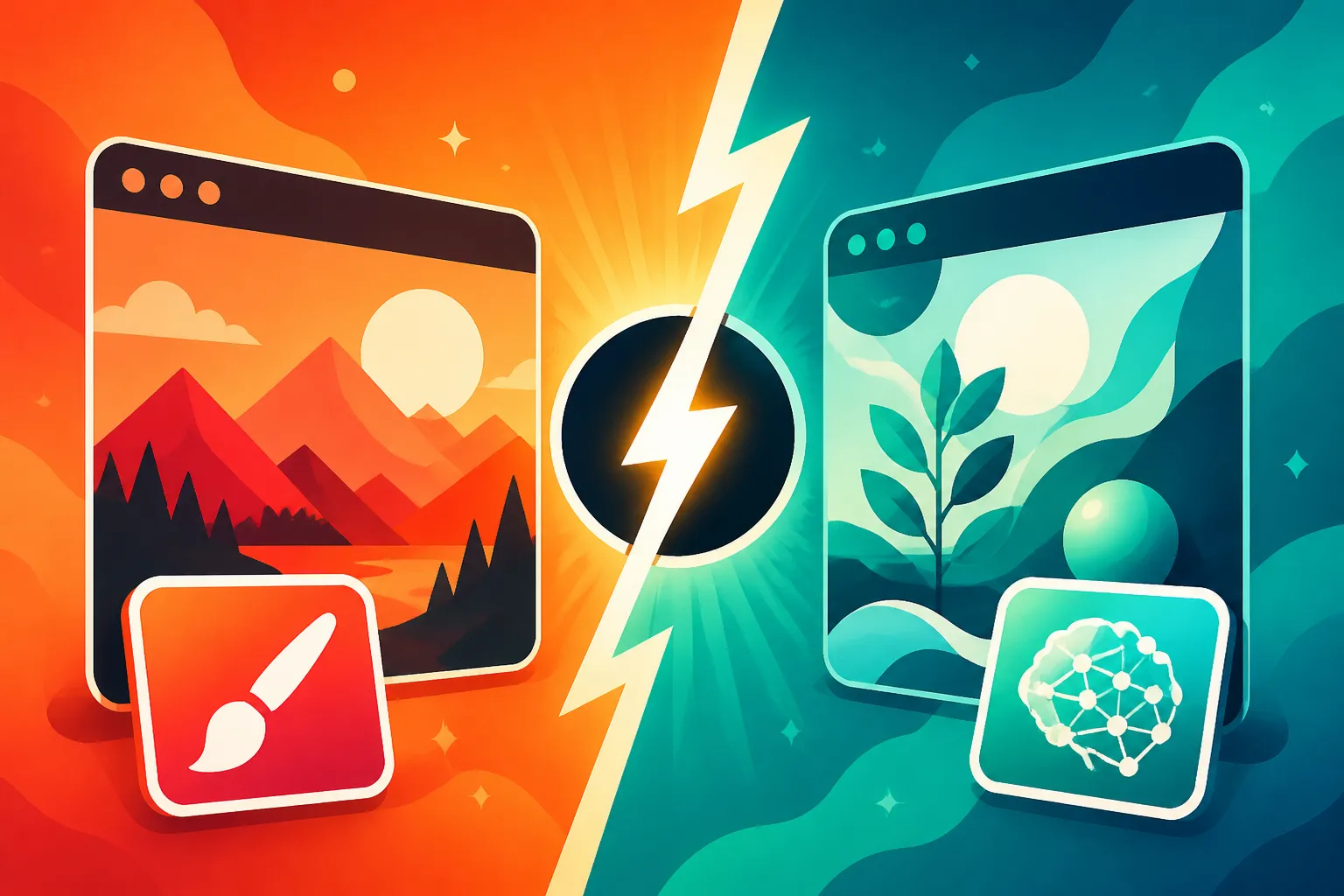
Adobe Firefly vs DALL-E for Commercial Work
Navigating the world of AI image generation for commercial projects can feel like walking through a minefield. You're not just looking for cool images; you need reliability, legal clarity, and quality that upholds your brand's reputation. Many of us creative professionals and business owners find ourselves asking which platform truly has our back when it comes to commercial use, and the debate between Adobe Firefly and DALL-E is a prime example of this complex decision. This guide aims to thoroughly break down the critical factors that differentiate these two powerful tools, helping you make an informed choice for your commercial endeavors.
The Crucial Importance of Commercial Rights in AI Imagery
Let's be real, the moment you plan to use an image to make money, whether it's for an ad campaign, a product listing, or a client's website, everything changes. The casual fun of generating a quirky image for personal use instantly transforms into a serious legal and ethical consideration. Without a clear understanding of commercial rights and appropriate licensing, you could inadvertently expose yourself or your business to significant risks. This isn't just theoretical; lawsuits related to copyright infringement are becoming more common as AI art proliferates.
Why Commercial Viability is Non-Negotiable for Businesses
For any business, big or small, every asset used in marketing, branding, or product development needs to be watertight. Imagine spending weeks on a new marketing campaign, only to find out the captivating hero image you used was generated by an AI model trained on copyrighted work without permission, and now you're facing a cease-and-desist letter or worse. This isn't just a financial hit; it's a blow to your reputation, something far harder to recover.
The source of the training data is a huge part of this puzzle. Many AI models have been trained on vast datasets scraped from the internet, which inevitably includes copyrighted material. If your generated image bears a striking resemblance to an existing copyrighted work, you could be in hot water. This uncertainty alone is enough to give any conscientious business owner sleepless nights. Ensuring the AI tool you choose explicitly addresses commercial use and potential intellectual property (IP) issues is paramount. It’s not about finding the prettiest image; it’s about finding a pretty image you can confidently publish and profit from without looking over your shoulder. For those delving deeper into what this means, our guide on How to Use AI Images Commercially Safe provides extensive details.
Understanding Indemnification and What It Means for You
This is where the rubber meets the road, especially for commercial users. Indemnification is a fancy legal term that essentially means one party agrees to protect another party from liability for certain actions. In the context of AI image generation, if an AI company offers indemnification, they are essentially saying, "If you get sued because an image generated by our tool infringes on someone else's copyright, we'll cover the legal costs and damages."
This is a massive differentiator. For many artists, designers, and marketers, the fear of accidentally infringing on someone's copyright with AI-generated content is a significant barrier. An indemnification policy acts as a shield, providing a level of security that allows you to integrate AI tools into your commercial workflow with greater confidence. Not all AI image generators offer this, and those that do often have specific conditions. It’s a crucial detail that can save you immense stress and potential financial ruin. Before signing up for any service, always scrutinize their terms of service regarding commercial use and indemnification clauses. For a deep dive into this, you might find our article on Firefly IP Indemnification Explained particularly enlightening.
Adobe Firefly: Purpose-Built for Commercial Confidence
Adobe Firefly has made a strong statement in the AI image generation space, positioning itself squarely as a tool for creative professionals and businesses who need to generate content with commercial safety in mind. This focus isn't accidental; it’s a strategic move to address the very concerns we've just discussed.
Firefly’s Foundation: Training Data and Indemnity
One of Firefly's most significant advantages, especially for commercial users, lies in its training data. Adobe has explicitly stated that Firefly is trained on a dataset of licensed images from Adobe Stock, publicly available content where copyright has expired, and content that Adobe has specifically licensed. This meticulous approach to training data is intended to minimize the risk of generating images that infringe on existing copyrights. This is a huge sigh of relief for anyone in the commercial space.
Beyond the training data, Adobe offers IP indemnification for content generated with Firefly when used commercially. This means that if you use Firefly-generated images for business purposes and later face a third-party claim of intellectual property infringement, Adobe is prepared to defend you and cover associated legal costs. This level of assurance is a game-changer for agencies, brands, and individual creators who rely on consistent, legally sound visual assets. It allows creative teams to explore new ideas with AI without the constant underlying worry of copyright issues. Our detailed Adobe Firefly Commercial Safety Review delves into the specifics of these protections.
Seamless Integration and Creative Control for Professionals
For anyone already entrenched in the Adobe ecosystem, Firefly feels like a natural extension of their existing workflow. It’s not just a standalone web application; its capabilities are increasingly integrated into popular Adobe Creative Cloud applications like Photoshop and Illustrator. This means you can use features like Generative Fill, Generative Expand, and Text to Image directly within the tools you already use every day.
Imagine working on a client's brochure in InDesign, needing a specific type of background, and being able to generate it on the fly with Firefly, right there, without switching applications. This level of integration streamlines the design process, making AI a powerful assistant rather than a separate, clunky step. Firefly also offers robust control over outputs, allowing users to guide the AI with style references, structural prompts, and aspect ratio adjustments, ensuring generated images align with specific project requirements and brand guidelines. This focus on creative control within familiar environments makes Adobe Firefly Review for Commercial Use a must-read for many professionals.
DALL-E: Pioneering Innovation with Broad Accessibility
DALL-E, particularly DALL-E 3, has captured the imagination of millions with its groundbreaking ability to generate incredibly diverse and high-quality images from simple text prompts. Developed by OpenAI, it has been at the forefront of the generative AI revolution.
DALL-E’s Strengths: Nuanced Prompts and Accessibility
One of DALL-E's standout features, especially DALL-E 3, is its remarkable understanding of natural language prompts. Users often report that DALL-E can interpret more complex, conversational prompts and produce surprisingly accurate and contextually relevant images. This makes it incredibly user-friendly, as you don't necessarily need to master intricate prompt engineering techniques to get good results. Its integration into ChatGPT Plus further enhances its accessibility, allowing users to refine prompts through a dialogue, much like brainstorming with a human artist. This conversational approach can lead to highly creative and unexpected outputs, ideal for rapid prototyping or exploring conceptual ideas. If you're wondering how well it performs through that interface, check out our piece on DALL-E in ChatGPT: How Good Is It.
DALL-E excels at generating a wide array of styles, from photorealistic to artistic, abstract, and everything in between. It's fantastic for generating unique concepts quickly, producing variations, and experimenting with visual themes without needing extensive graphic design skills. For content creators and marketers looking for quick, innovative visuals, DALL-E can be a powerful asset.
Commercial Use and DALL-E’s Policies
While DALL-E is incredibly powerful and accessible, its commercial use policies present a different landscape compared to Adobe Firefly. OpenAI generally allows users to use images generated with DALL-E for commercial purposes, provided they adhere to the content policy. This means you can create images for your marketing, products, or client work. However, there's a significant distinction: OpenAI does not offer the same level of IP indemnification that Adobe provides with Firefly.
This means the responsibility for ensuring that a DALL-E generated image doesn't infringe on existing copyrights ultimately falls on the user. If you were to face a lawsuit over a DALL-E generated image, OpenAI would not step in to cover your legal fees or damages. For businesses, this lack of indemnification can introduce a layer of risk and uncertainty. While OpenAI has taken steps to mitigate risks by filtering out certain copyrighted styles or celebrity likenesses, the inherent nature of training on vast, diverse internet datasets means the potential for unintended resemblances or infringements still exists. This places the onus on the commercial user to perform their own due diligence, which might involve manual checks or additional licensing research, before deploying DALL-E generated images in high-stakes commercial projects. Understanding these nuances is crucial, and articles like Is DALL-E Worth It in 2026 discuss these implications further.
Adobe Firefly vs DALL-E: A Head-to-Head for Commercial Workflows
When it comes down to making a choice for your commercial projects, it's not about which tool is "better" overall, but which one better aligns with your specific needs, risk tolerance, and workflow. Both Adobe Firefly and DALL-E are phenomenal in their own right, but they cater to slightly different priorities in the commercial sphere.
Legal Confidence and Intellectual Property Protection
This is arguably the most significant differentiator for commercial users.
-
Adobe Firefly: Offers robust IP indemnification, meaning Adobe will stand behind you if you face copyright infringement claims related to images generated by Firefly for commercial use. This is largely due to its training on licensed Adobe Stock content and public domain material. For businesses and agencies, this reduces legal risk dramatically and provides peace of mind. For many, this alone is a compelling reason to choose Firefly, especially for client-facing work or high-visibility campaigns. It's an investment in security.
-
DALL-E: While allowing commercial use, DALL-E does not offer IP indemnification. Users are solely responsible for verifying that their generated images do not infringe on existing copyrights. This means if a DALL-E image leads to legal issues, you are on your own. This isn't to say DALL-E images will cause problems, but the inherent risk is transferred entirely to the user. For smaller businesses or individual creators with less legal overhead, this might be a concern that necessitates more careful vetting of every image before commercial deployment.
Image Quality, Creative Control, and Refinement
Both tools produce high-quality images, but their strengths can vary depending on the desired outcome and the level of control required.
-
Adobe Firefly: Excels in consistency and integration within professional design workflows. Its ability to generate content directly within Photoshop or Illustrator, and apply specific styles or textures from existing assets, makes it invaluable for maintaining brand consistency. Firefly's generative fill and expand features are particularly powerful for photo editing and extending images. While it might sometimes be perceived as having a slightly more "Adobe-esque" polished aesthetic, its strength lies in predictable, high-quality output that fits seamlessly into a professional creative pipeline. It also offers solid control over parameters like aspect ratio and style.
-
DALL-E: Often lauded for its ability to grasp complex, nuanced prompts and generate highly creative, imaginative, and diverse imagery. It can produce truly unique concepts and often surprises users with its interpretations. For those looking for highly stylized art, abstract concepts, or innovative visual ideas that might push creative boundaries, DALL-E can be exceptional. Its integration with ChatGPT allows for iterative prompting and refinement through conversation, which can be very intuitive. However, achieving precise artistic control or consistent character models across multiple generations can sometimes be more challenging than with other tools, though it has improved significantly. For a broader comparison of top tools, you could consult Best AI Image Generator Comparison.
Workflow Integration and Ease of Use
Consider how these tools fit into your daily tasks.
-
Adobe Firefly: Its deep integration with the Adobe Creative Cloud suite means a virtually seamless experience for existing Adobe users. This reduces friction in the design process, allowing creators to leverage AI capabilities without exporting, importing, or switching between multiple platforms. The learning curve is minimal for those already familiar with Adobe products. Its web interface is also very user-friendly for standalone generation.
-
DALL-E: Primarily accessed through the OpenAI website or via ChatGPT. While straightforward for generating images, it requires a separate step to export and then import into other design software. For quick conceptualization or standalone image needs, this might not be an issue. However, for complex projects requiring multiple iterations or extensive editing within a design suite, the lack of direct integration can be a slight impediment. That said, its conversational prompt generation via ChatGPT can make it incredibly easy for beginners to get started quickly without prior prompt engineering knowledge.
Pricing and Value Proposition
Both platforms offer different subscription models.
-
Adobe Firefly: Generally tied into Adobe Creative Cloud subscriptions, or as a standalone Firefly subscription which includes a certain number of generative credits. The value proposition here includes not just the image generation but also the legal indemnification and integration benefits. For businesses already invested in Adobe's ecosystem, the added value of Firefly can be significant. More details can be found in our deep dive, Is Adobe Firefly Worth It.
-
DALL-E: Available through various OpenAI plans, including ChatGPT Plus, which grants access to DALL-E 3. It typically operates on a credit-based system for API access or included in premium chat subscriptions. Its value comes from its leading-edge capabilities in understanding complex prompts and generating diverse images. The cost-effectiveness depends heavily on usage volume and the specific plan chosen. For a deep look into DALL-E pricing, check out DALL-E Pricing and Plans Explained.
Here's a quick comparison table to summarize the key points:
| Feature | Adobe Firefly | DALL-E |
|---|---|---|
| Primary Commercial Strength | IP Indemnification, Creative Cloud Integration | Nuanced Prompt Understanding, Conceptual Diversity |
| Training Data Source | Adobe Stock, public domain, licensed content | Broad internet datasets |
| IP Indemnification | YES (for commercial use) | NO (user assumes responsibility) |
| Workflow Integration | Deep with Adobe Creative Cloud (Photoshop, etc.) | Standalone web, integrated with ChatGPT |
| Creative Control | High, with professional refinement tools | High conceptual, evolving artistic control |
| Ease of Use | Intuitive for Adobe users; user-friendly web UI | Highly accessible, conversational prompting |
| Best For | Agencies, designers, businesses needing legal safety & integration | Ideation, unique concepts, rapid prototyping |
| Typical Use Cases | Marketing collateral, product mockups, ad creatives, design refinement | Blog images, social media graphics, conceptual art, quick idea generation |
In conclusion, if you prioritize legal safety, seamless integration into a professional design workflow, and peace of mind from IP indemnification, Adobe Firefly is likely your stronger contender for commercial work. Its foundation is built with enterprise and creative agency needs firmly in mind. However, if your commercial work leans heavily into rapid ideation, generating highly creative and diverse conceptual images from complex prompts, and you're comfortable with the responsibility of your own IP vetting, DALL-E offers unparalleled capabilities. Many creative professionals find value in using both, leveraging DALL-E for initial brainstorming and concept generation, and then refining or recreating assets in Firefly for final commercial deployment, especially when legal assurances are critical. For a broader perspective on how Firefly compares to other tools, explore Adobe Firefly vs Midjourney for Commercial Work.
Disclaimer
The information provided in this article is for general informational purposes only and does not constitute legal, financial, or professional advice. While we strive to provide accurate and up-to-date information, the landscape of AI technology and its legal implications is constantly evolving. Always consult with a qualified legal professional regarding specific intellectual property rights, commercial use policies, and indemnification agreements pertaining to AI-generated content before making any business decisions. The effectiveness of any AI tool may vary based on individual use and specific circumstances.