Open-Source vs Closed AI Image Models
Choosing the right AI image generation tool can feel like navigating a labyrinth, especially when you're faced with the fundamental choice between open-source and closed (proprietary) models. Many creators and businesses find themselves frustrated, unsure whether to embrace the freedom and customizability of open-source platforms or the polished simplicity and support of their closed counterparts. This comprehensive guide is here to demystify these two distinct paths, helping you understand their core differences, weigh their pros and cons, and ultimately decide which type of AI image model best aligns with your creative workflow and operational needs.
Understanding Open-Source AI Image Models
Open-source AI image models are akin to a communal art studio where everyone can see the blueprints, tweak the tools, and even build new ones from scratch. At their heart, "open source" means the underlying code, algorithms, and often the trained models themselves, are publicly accessible. This isn't just a technicality; it fosters a vibrant community, rapid innovation, and unparalleled flexibility for users who are willing to roll up their sleeves.
The Philosophy of Openness and Community-Driven Development
The entire premise of open-source software, including AI models, is rooted in transparency and collaboration. Imagine a vast global network of developers, researchers, and enthusiasts all contributing to and improving the same core technology. This collective effort means that bugs are often found and fixed quickly, new features are constantly being experimented with, and the models evolve at an incredible pace. For example, a model like Stable Diffusion has seen countless iterations, fine-tuned versions, and specialized applications thanks to its dedicated community. This isn't just about charity; it's about shared progress and the belief that innovation thrives when knowledge is freely exchanged.
This community aspect also means you're rarely alone if you run into an issue. Forums, Discord channels, and online communities dedicated to these models are brimming with users eager to share tips, troubleshoot problems, and showcase their latest creations. This support network can be invaluable, especially if you're venturing into more complex customizations. It truly embodies the idea that we're all in this creative journey together, helping each other push the boundaries of what's possible with AI art.
Freedom of Customization and Local Control
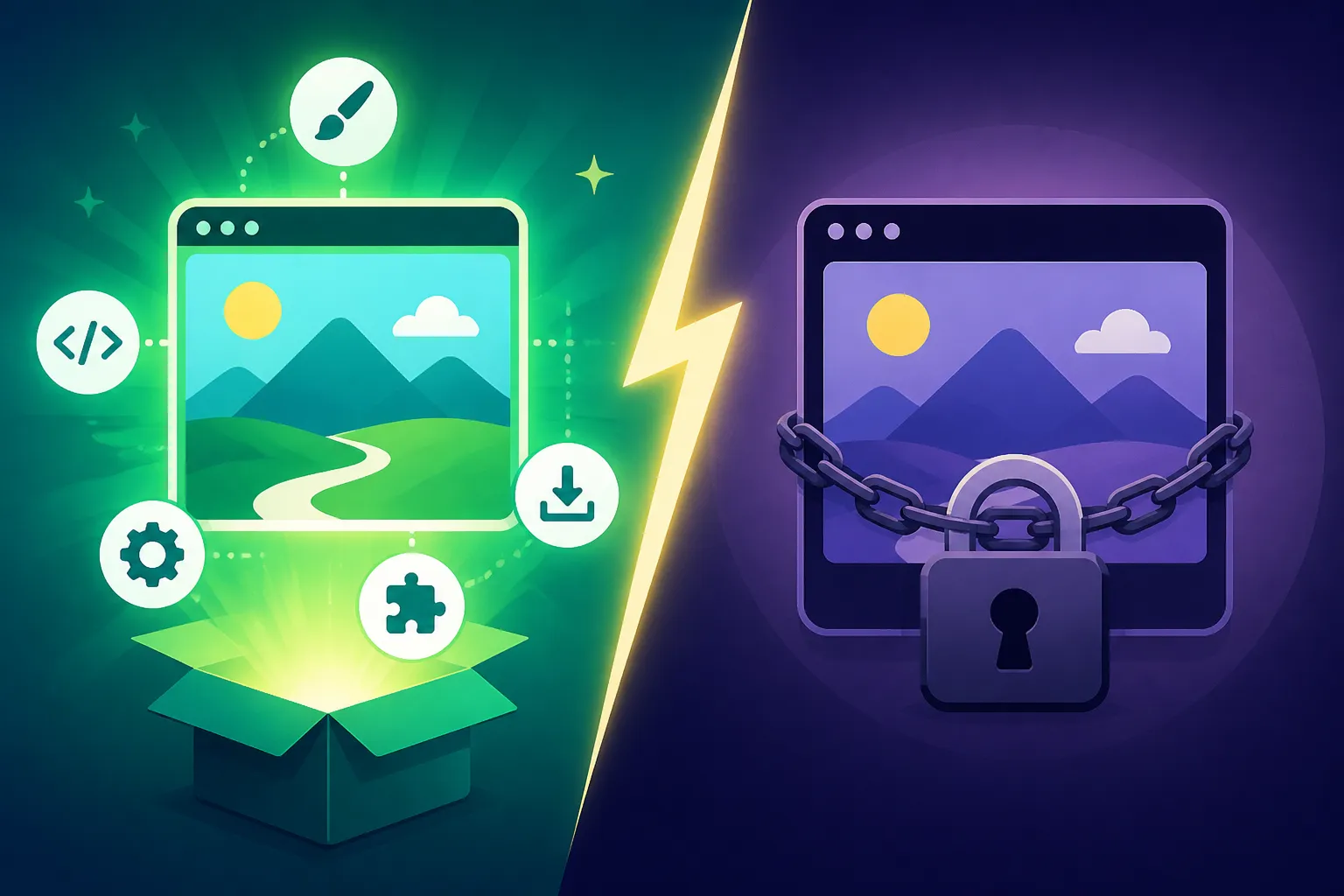
One of the most compelling advantages of open-source AI image models is the sheer degree of control and customization they offer. Because the code is accessible, you can download the model and run it directly on your own hardware – whether that's a powerful gaming PC or a dedicated server. This capability, often referred to as running the model "locally," means you're not reliant on external servers, internet connectivity, or someone else's terms of service for basic generation. It’s like owning your own personal print shop instead of always having to go to a commercial one.
This local control opens up a world of possibilities for advanced users. You can fine-tune models on your specific datasets, allowing you to generate images that perfectly match a particular aesthetic, brand style, or even a specific character's appearance across multiple images. Artists who need consistent characters in a comic or marketing teams requiring uniform product shots will find this level of granular control indispensable. Tools like ControlNet, available with many open-source models, offer incredible precision over composition, pose, and style, something that's often limited or entirely absent in closed systems. If you're wondering how to get specific, nuanced results, exploring how to run AI image models free locally could be a game-changer for your workflow.
Cost Implications and Hardware Requirements
While many open-source models are "free" in terms of licensing, meaning you don't pay for the software itself, there are often indirect costs, particularly related to hardware. To run these models effectively on your local machine, especially for generating high-quality images quickly, you'll need a reasonably powerful graphics card (GPU) with sufficient VRAM. This investment can be significant. For a hobbyist or someone just starting out, this upfront cost might be a barrier.
However, once you have the hardware, your generation costs are essentially zero, limited only by your electricity bill. This can translate to substantial savings over time, especially for heavy users who might otherwise accrue significant monthly fees with paid, closed services. Furthermore, if you don't have the hardware, there are often cloud-based services that allow you to rent GPU time to run open-source models, offering a flexible pay-as-you-go alternative. This means you can still leverage the power of open-source models without committing to a costly local setup right away, making the overall cost landscape quite versatile.
Exploring Closed AI Image Models
On the other side of the spectrum, we have closed, or proprietary, AI image models. Think of these as meticulously designed, state-of-the-art art studios run by a single company. You pay for access, and in return, you get a highly refined, user-friendly experience without needing to worry about the underlying complexities. These models are typically offered as software-as-a-service (SaaS) products, accessed through a web interface or an integrated application.
The Appeal of Simplicity and User Experience
Closed AI image models often prioritize ease of use and a smooth, intuitive experience. Companies like OpenAI with DALL-E, or Midjourney, invest heavily in crafting interfaces that are straightforward, even for complete beginners. You don't need to install any software, configure settings, or understand command-line prompts. You simply log in, type your prompt, and within moments, you have impressive images. This "plug-and-play" nature is a huge draw for many users, especially those who prioritize speed and efficiency over deep customization.
The typical user journey involves a clean web portal, perhaps some in-app tutorials, and quick access to generation features. This polished approach minimizes the learning curve, allowing creators to jump straight into generating content. For instance, the accessibility of a tool like DALL-E makes it incredibly popular for quick content creation, whether for social media graphics or blog post illustrations. It's about getting good results with minimal fuss, making these tools a go-to for many busy professionals and casual users alike.
Performance, Support, and Commercial Readiness
Closed models are often backed by substantial corporate resources, which translates to robust infrastructure and dedicated customer support. When you use a service like Adobe Firefly, you're not just getting an image generator; you're often getting a guarantee of performance, uptime, and assistance if things go wrong. These companies have powerful server farms running their models, meaning you typically get fast generation times without needing to invest in expensive local hardware.
Perhaps even more critically for businesses, many closed models offer clearer guidelines and sometimes even indemnification for commercial use. This means the company stands behind the images generated by their tool, often providing legal protection against intellectual property claims if their AI art somehow infringes on existing copyrights. This assurance is a massive relief for marketers, designers, and businesses who rely on AI-generated images for client work or product launches and need to ensure their assets are commercially safe. For anyone concerned about the legalities of using AI images for commercial purposes, checking out reviews like Adobe Firefly Review for Commercial Use can provide valuable insights.
Subscription Models and Credit Systems
Unlike the upfront hardware investment of open-source, closed AI image models almost universally operate on a subscription or credit-based system. You pay a monthly or annual fee, or purchase credits, to generate images. The pricing structures can vary significantly, from basic free tiers with limited generations to premium plans offering unlimited access, faster generation, and advanced features.
This payment model can be both a benefit and a drawback. For light users, a free tier or a low-cost subscription might be perfectly adequate. For heavy users, however, these costs can quickly add up, potentially surpassing the initial investment of open-source hardware over time. It requires careful consideration of your anticipated usage. Think about it like a gym membership: if you go every day, it's great value; if you only go once a month, not so much. Understanding the different plans, such as those covered in articles like Midjourney Pricing and Plans Explained, is essential for making an informed decision about cost-effectiveness.
Key Differences and Considerations
When standing at the crossroads of open-source and closed AI image models, the decision often boils down to a few critical differentiating factors. It's not about one being inherently "better" but rather about which one is a better fit for your specific situation, skill set, and goals.
Flexibility vs. Simplicity
This is perhaps the most fundamental trade-off. Open-source models, by their very nature, offer immense flexibility. You can tinker, experiment, and customize almost every aspect of the image generation process. You can apply specific models, use LoRAs, implement ControlNet for precise pose control, and integrate them into complex workflows. This is ideal for those who love to dive deep, have specific artistic visions, or require highly specialized outputs. However, this flexibility comes at the cost of simplicity. There's a steeper learning curve, more setup involved, and you're generally responsible for troubleshooting your own issues.
Closed models, conversely, champion simplicity. They are designed for quick results, ease of use, and a streamlined experience. You interact with a polished interface, often requiring minimal technical knowledge. This makes them fantastic for beginners, individuals needing rapid content, or those who simply don't have the time or inclination to delve into the technical minutiae. The trade-off here is reduced flexibility and customization options; you're generally limited to the features and parameters provided by the platform.
Cost Structures and Long-Term Value
The financial implications are another major divergence. As discussed, open-source models are "free" software but can demand a significant upfront investment in powerful local hardware. Once that investment is made, your recurring costs are minimal. This model often presents greater long-term value for consistent, heavy users who can amortize their hardware costs over many generations.
Closed models, on the other hand, typically involve recurring subscription fees or credit purchases. While there's no upfront hardware cost, these cumulative payments can become substantial over time, especially for high-volume generation. However, for casual users, small businesses with occasional needs, or those who prefer not to manage local hardware, the subscription model offers convenience and scalability without a large initial outlay. For a deeper dive into cost analysis, you might compare options like Is Leonardo AI Worth It with the insights from Best Budget AI Image Generators.
| Feature | Open-Source AI Image Models | Closed AI Image Models |
|---|---|---|
| Code Access | Publicly available | Proprietary, hidden |
| Customization | High (fine-tuning, LoRAs, ControlNet) | Low to Moderate (platform-dependent settings) |
| Ease of Use | Moderate to High (steeper learning curve) | High (intuitive UI, ready-to-use) |
| Hardware Needs | Requires powerful local GPU | Relies on provider's cloud servers |
| Cost Model | Upfront hardware, then mostly free | Subscription/credit-based, recurring fees |
| Community Support | Strong, peer-driven forums/Discord | Official customer support, documentation |
| Innovation Pace | Rapid, community-driven experimentation | Controlled, company-driven updates |
| Commercial Use | Varies, often user's responsibility | Often clearer terms, sometimes indemnification |
| Offline Use | Yes, if run locally | No, requires internet access |
Technical Skill Level and Learning Curve
Your comfort level with technology will heavily influence your choice. Open-source models are generally more demanding from a technical standpoint. Setting them up, configuring parameters, and leveraging advanced features often requires a willingness to engage with command-line interfaces, understand file structures, and troubleshoot technical glitches. It's a journey best suited for those who enjoy problem-solving and diving into the mechanics of software. Developers and technical artists often gravitate towards these tools.
Closed models are built with the average user in mind. The learning curve is typically much gentler, focusing on creative prompting and selecting options within a graphical user interface. If you're an artist who wants to focus solely on creative output without getting bogged down in technicalities, or a marketer needing quick visuals, a closed system will likely offer a smoother, less frustrating experience. This isn't to say there's no learning involved with prompting, but the technical barrier to entry is significantly lower.
Commercial Rights and Intellectual Property
This area can be a minefield for both types of models, but there are distinct differences in how each approaches it. With open-source models, the responsibility for commercial use and ensuring no copyright infringement largely falls on the user. While the models themselves might be permissively licensed, the images they generate can still contain elements that resemble existing copyrighted works, and tracing that back can be complex. You need to be diligent in verifying the commercial safety of your outputs.
Closed models often provide clearer terms of service regarding commercial use. Some, like Adobe Firefly, offer specific assurances and even legal indemnification, meaning they will back you if an IP claim arises from an image generated through their platform. This can be a huge advantage for businesses and professionals who need certainty and protection. However, even with closed models, it's crucial to read the fine print, as terms can vary widely. For a thorough understanding, consider reviewing resources like Adobe Firefly Commercial Safety Review.
Which Model is Right for You?
Making the final choice between open-source and closed AI image models truly depends on your individual circumstances, goals, and resources. There's no one-size-fits-all answer, but by asking yourself a few key questions, you can navigate towards the best fit.
For the Hobbyist or Experimenter
If you're an aspiring digital artist, a curious hobbyist, or someone who loves to tinker and experiment without a strict budget or commercial imperative, open-source models might be your playground. The sheer depth of customization, the active community, and the freedom to explore various forks and fine-tuned versions can be incredibly rewarding. You might initially invest in a decent GPU, but the ability to generate unlimited images locally without ongoing subscriptions often makes it a cost-effective choice in the long run. Tools like Stable Diffusion Review: Free and Customizable are perfect for this demographic, allowing for extensive experimentation without prohibitive costs.
For the Professional Artist or Developer
For professional artists, graphic designers, or developers who need granular control over their output, require specific art styles, or want to integrate AI image generation into their existing tools and pipelines, open-source models offer unparalleled power. The ability to fine-tune models on proprietary data, ensuring brand consistency or unique artistic signatures, is a significant advantage. Developers can integrate these models into custom applications, creating bespoke solutions for specific problems. The learning curve might be steeper, but the payoff in terms of creative control and technical mastery is immense. If you’re building something unique or need precise control, the flexibility of open-source tools is hard to beat. Resources like Best AI Image Generator for Developers can highlight why these tools are a favorite among the technically inclined.
For Small Businesses, Marketers, and Content Creators
If your primary need is quick, high-quality images for marketing campaigns, social media, blog posts, or e-commerce listings, and you value ease of use and reliability above deep customization, closed AI image models are likely your best bet. The streamlined interfaces, fast generation times, and professional support mean you can focus on your core business rather than wrestling with technical setups. The subscription costs, while recurring, are often predictable and can be factored into operational budgets, offering commercial peace of mind. For example, platforms like DALL-E Review: Is It Worth It or those designed for commercial safety like Adobe Firefly Review for Commercial Use provide excellent options for rapid, reliable content creation.
The Hybrid Approach: Best of Both Worlds
It's also important to remember that you don't have to pick just one path forever. Many successful creators and businesses adopt a hybrid approach. They might use a user-friendly closed model for rapid prototyping, quick social media posts, or when they need commercially indemnified assets. At the same time, they might leverage an open-source model on a local machine for highly customized projects, detailed artistic work, or when exploring new creative directions that demand ultimate control.
Consider using a tool like Leonardo AI Review for its blend of user-friendliness and advanced features, while simultaneously experimenting with Stable Diffusion Alternatives to tap into the latest community innovations. This allows you to benefit from the strengths of both worlds, optimizing your workflow for different tasks and expanding your creative toolkit. Ultimately, understanding both sides of the coin, as detailed in comparisons like Midjourney vs DALL-E: Which Is Better or Midjourney vs Stable Diffusion Compared, empowers you to make strategic choices about your AI image generation strategy. Exploring Free vs Paid AI Image Generators can further clarify where each type excels.
At the end of the day, the landscape of AI image generation is constantly evolving. What’s considered cutting-edge today might be standard tomorrow. By understanding the core tenets of open-source and closed models, you're better equipped to adapt, experiment, and make choices that truly empower your creative or business endeavors, whether you need Best AI Image Generator for Commercial Use or simply want to explore new artistic horizons.
Disclaimer
The information provided in this article is for general informational purposes only and does not constitute financial, legal, or professional advice. While we strive to provide accurate and up-to-date information, the field of AI is rapidly changing. Always conduct your own research and consult with appropriate professionals before making any decisions based on the information presented here.