Hidden Costs of Free AI Image Tools
Oh, the sweet siren song of "free" AI image tools! It’s incredibly tempting, isn't it? We all love a good deal, and when something as powerful as artificial intelligence image generation is offered at no cost, it feels like hitting the jackpot. But if you’ve spent any time exploring these options, you might have noticed that "free" often comes with its own set of complications. You excitedly dive in, only to find yourself banging your head against a wall later, realizing you're spending more than just time. This guide is going to pull back the curtain on those hidden costs, helping you understand what you're truly signing up for when you opt for free AI image generation.
The Allure of "Free" AI Image Generators: A Closer Look
It's completely understandable why so many of us are drawn to the promise of free AI image creation. Imagine, professional-looking graphics for your blog, social media, or even personal projects, without spending a dime! In a world where every subscription seems to add up, avoiding another monthly fee feels like a huge win. The initial excitement is palpable, especially when you see a tool cranking out images right before your eyes.
Understanding What "Free" Really Means
Here’s the thing: "free" in the AI image generation world rarely means completely unrestricted access to all features, forever. Most often, it signifies a freemium model. This means you get a taste of what the tool can do, usually with significant limitations, hoping that you'll love it enough to eventually upgrade to a paid plan. Think of it like a free sample at a grocery store – delicious, but you only get one bite.
These limitations can manifest in various ways. You might be given a finite number of credits per day or month, which disappear faster than you'd expect when you're experimenting or trying to generate multiple variations of an image. Suddenly, that "unlimited potential" feels very limited. Other tools might offer a truly free tier, but with throttled generation speeds, meaning you wait longer for your images to appear, chewing up valuable time. Or, they might restrict access to their most advanced features, leaving you with simpler models that can't quite achieve the sophisticated look you desire. It’s a delicate balancing act designed to give you just enough to get hooked, but not enough to be fully satisfied.
The Trade-off: Convenience vs. Capability
When you lean into a free AI image generator, you're inherently making a trade-off. On one hand, you get the immense convenience of generating visuals quickly and without direct financial outlay. This is fantastic for quick mock-ups, brainstorming, or just dabbling in the world of AI art. Need a quick background image for a presentation? A free tool can often whip one up in a flash.
However, this convenience often comes at the cost of capability. The images might not be high-resolution enough for print, or they might lack the intricate detail you'd expect from a professional design. You might find that the tool struggles with specific styles, faces, or text integration, leading to images that look "off" or amateurish. For instance, if you're trying to achieve photorealism, many free tools might fall short, producing images that have that tell-tale "AI look" rather than genuinely convincing photographs. It’s important to ask yourself: am I saving money now, only to spend more time later trying to fix or compromise on the quality of my visuals?
The Invisible Price Tag: What You Actually Pay
Beyond the obvious limitations, there are several "invisible" costs that can creep up on you when relying on free AI image tools. These aren't line items on a bill, but they can hit your productivity, your professional image, and even your wallet in the long run. It's crucial to understand these nuanced expenses before you commit valuable time and effort.
Time and Frustration: The Cost of Poor Quality and Limited Features
One of the biggest hidden costs is your own time and sanity. When a free tool consistently produces images that are almost right, but not quite, you end up spending an exorbitant amount of time trying to "fix" them. This often means endlessly tweaking prompts, generating dozens of variations, or even taking the AI-generated image into another editing software (like Photoshop or Canva) to make it usable. This process can be incredibly frustrating.
Imagine you need a specific image for a blog post. You generate it with a free tool, but the character has six fingers, or the background is distorted, or the text you wanted it to include is utter gibberish. Suddenly, what should have been a quick task becomes an hour-long battle of prompt engineering and external editing. This is especially true for intricate details like realistic human faces or legible text, where many free models struggle. Tools like Midjourney, known for its quality, might seem expensive, but its ability to nail details often saves hours of frustration compared to a free counterpart that constantly churns out imperfect results. If you're struggling with bad outputs, our guide on how to fix bad AI image results might offer some relief, but often the best "fix" is a more capable tool.
Restricted Usage Rights: Commercial Constraints
This is perhaps the most critical hidden cost, especially for professionals, freelancers, and small businesses. Many "free" tiers of AI image generators come with very restrictive commercial usage rights. What does this mean? It means you might be prohibited from using the images you generate for anything that could potentially earn you money – selling prints, using them on your business website, in advertisements, or for client work.
The legal landscape around AI-generated images and copyright is still evolving, but violating a tool's terms of service regarding commercial use can lead to significant legal headaches down the road. You might unknowingly use an image that belongs to the AI company or a third-party licensor, opening yourself up to cease-and-desist letters or even lawsuits. Always, always check the specific terms and conditions for commercial use before integrating images from a free tool into your professional workflow. Our deep dive into Free AI Image Generators with Commercial Use can help you navigate these murky waters and avoid a costly mistake. Don't assume that just because you "made" it, you own it completely.
Watermarks, Lower Resolution, and Branding Issues
Have you ever generated a stunning image with a free tool, only to download it and find a prominent watermark plastered across it? It's a common tactic for free tiers, forcing you to upgrade to remove their branding. While a watermark might be acceptable for a personal project or a quick draft, it instantly undermines the professionalism of any business or client-facing material. Imagine presenting a marketing campaign with watermarked images – it simply won't fly.
Beyond watermarks, free tools often limit the output resolution of your images. While a lower resolution might look fine on a small social media post, it becomes pixelated and unusable when scaled up for a website banner, a print ad, or even a YouTube thumbnail. You might think you've saved money, but if the image isn't fit for its intended purpose, you'll end up needing to generate a new one or painstakingly upscale AI images, which can introduce its own set of quality issues. This lack of high-quality output also impacts your brand consistency. If you can't reliably produce sharp, clean, unwatermarked images, your brand's visual identity will suffer, making you appear less credible and polished.
The Hidden Value Drain: Long-Term Implications
The immediate costs like time and usage restrictions are apparent, but the long-term impact of relying solely on free AI image tools can quietly erode your creative potential and business efficiency. It's like using a dull knife for every meal – it gets the job done eventually, but with a lot more effort and less satisfying results.
Stifled Creativity and Workflow Inefficiencies
Free tools, by their very nature, are designed with limitations. These limitations can inadvertently stifle your creativity. If a tool constantly struggles with complex prompts, specific artistic styles, or the nuanced control you need to bring your vision to life, you might start simplifying your ideas to fit what the tool can do, rather than what you want to do. This leads to generic, uninspired visuals that lack originality. You might find yourself saying, "Well, it's good enough," instead of truly being proud of your creations.
Furthermore, these limitations create workflow inefficiencies. Instead of focusing on your core work, you're constantly troubleshooting, regenerating, or resorting to extensive post-processing to make free images viable. This adds extra steps and time to every project. Imagine if a graphic designer had to spend half their day removing watermarks and upscaling images rather than designing. It's a significant drain on productivity. Instead of an efficient creative pipeline, you end up with a clunky, multi-step process that feels more like a chore.
Data Privacy and Security Concerns
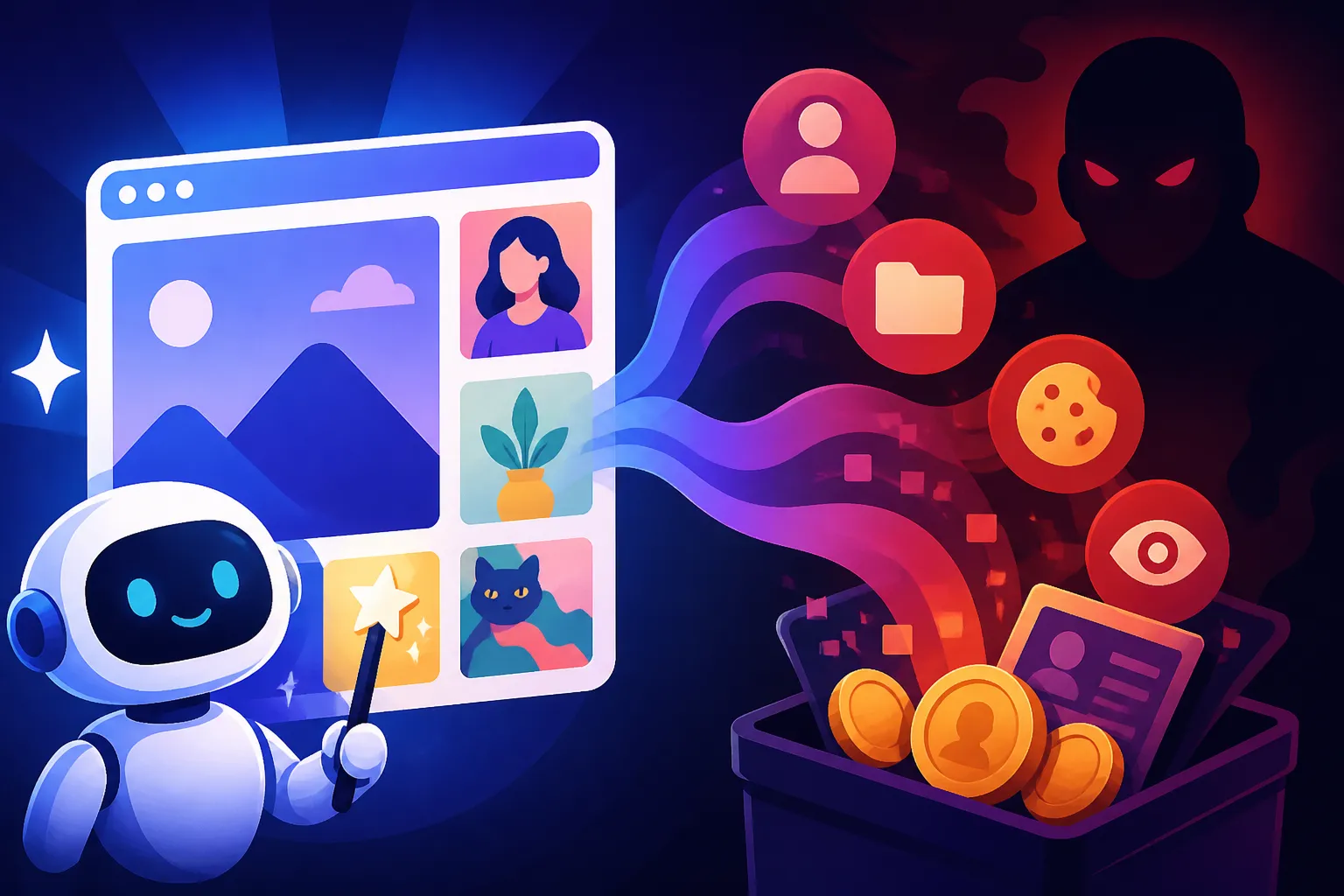
While not a direct financial cost, data privacy and security can be a significant hidden concern with free AI tools. If you're not paying for a service, remember the old adage: "If you're not paying for the product, you are the product." Many free AI image generators might use the images you upload or generate to further train their models, which could potentially expose sensitive or proprietary information. While most reputable services have clear policies, it's a risk factor to consider.
Moreover, the robustness of security measures can vary widely. Are your uploaded images and personal data truly secure? What are the terms regarding data retention and sharing? For businesses handling client work or sensitive product designs, the potential for data leakage or unauthorized use of creative assets is a serious consideration. Always review the privacy policy and terms of service before uploading any image you wouldn't want to see repurposed elsewhere.
The Inevitable Upgrade: Eventual Financial Investment
Perhaps the most insidious hidden cost is the eventual, almost inevitable, financial investment. You start with a free tool, get comfortable with its interface, and learn its quirks. You build a routine around it. Then, as your needs grow – higher resolution, commercial rights, more credits, advanced features, better consistency – you hit the ceiling of the free tier. At this point, you're faced with a choice: either abandon the tool you've invested time in learning and switch to another (potentially starting the "free tier headache" all over again), or upgrade to a paid plan.
This is where the "hidden" cost becomes very real. Because you're already invested in the platform, the decision to upgrade often feels less like a new purchase and more like a necessary continuation. You might end up paying for a subscription that, had you thoroughly evaluated paid options from the start, you might have found to be less suitable or less value-packed than other alternatives. For instance, you might have been better off exploring options like a Leonardo AI free tier review, which often outlines credit usage and upgrade paths. The "free" aspect simply delayed the payment, sometimes to a less advantageous moment for you.
Navigating the "Free" Landscape Smartly
So, does this mean all free AI image tools are inherently bad and should be avoided? Absolutely not! The trick is knowing when they shine and, more importantly, understanding their limitations before you invest your precious time.
When Free Tools Are Actually Great and When They're Not
Free AI image generators truly excel for specific use cases. If you're looking to simply experiment with AI art, try out different styles for fun, or create quick, low-stakes visuals for personal projects – say, a unique wallpaper for your phone or a fun image to share with friends – then free tools are fantastic. They serve as excellent playgrounds for learning how to prompt and understanding the basic mechanics of image generation without any financial commitment.
They're also useful for rapid prototyping or brainstorming. Need a bunch of ideas for a new logo concept? You can quickly generate many variations with a free tool, knowing that you'll refine the best ones later with a more robust solution. However, they fall short when consistency, high resolution, commercial rights, or complex customizability are non-negotiable. For professional branding, client work, print materials, or any project where quality and legal safety are paramount, free tools are almost always insufficient. For instance, when trying to create product photography, you'll quickly find that free tools lack the precision and consistency needed for commercial listings.
Essential Checks Before Committing to a Free Tool
Before you dedicate significant time to any "free" AI image generator, do your homework. A little upfront research can save you a lot of grief (and potential legal trouble) later.
First and foremost, always read the fine print on commercial usage rights. This is non-negotiable if you intend to use the images for anything beyond personal enjoyment. Some tools explicitly state that free tier images cannot be used commercially, while others might require attribution or have more nuanced clauses. Our guide on how to get free AI image credits or finding tools like Bing Image Creator Free Tier Explained can shed light on these details.
Secondly, assess the limitations on resolution and daily credits. Does the free tier offer enough images at a high enough quality for your basic needs? If you need high-resolution output, a tool that caps you at 512×512 pixels won't cut it. Also, consider any watermarks or branding that the tool imposes. Can you easily avoid AI image watermarks legally, or is an upgrade the only option?
Finally, think about the long-term. If you start with a free tool, how easy will it be to migrate to a paid one from the same provider if your needs evolve? What features are locked behind a paywall? Understanding these aspects from the outset will help you make an informed decision and prevent those frustrating hidden costs from blindsiding you.
Here’s a quick comparison of common differences between free and paid AI image tools:
| Feature | Typical Free Tier | Typical Paid Tier |
|---|---|---|
| Daily Credits/Generations | Limited (e.g., 10-50 per day) | Generous to unlimited |
| Commercial Use Rights | Often restricted or require attribution | Usually includes commercial license (check terms) |
| Resolution Output | Lower (e.g., 512×512, 1024×1024) | Higher (e.g., 2K, 4K, 8K) and upscaling options |
| Generation Speed | Slower, often queued | Faster, priority processing |
| Advanced Features | Limited (e.g., no inpainting, ControlNet, specific models) | Full access to advanced editing, custom models, parameters |
| Watermarks | Common | Generally absent |
| Image Ownership | Varies, often shared or limited | Clear ownership for commercial use |
| Support | Community-based or limited | Dedicated customer support |
| Brand Consistency | Difficult to maintain | Easier with consistent style options and seeds |
The world of AI image generation is exciting, and free tools have certainly democratized access to this incredible technology. Just remember that "free" isn't always truly free when you factor in your time, frustration, and potential legal or quality issues. Choose wisely, read the fine print, and you’ll be able to leverage AI images effectively, no matter your budget.
Disclaimer
The information provided in this article is for general informational purposes only and does not constitute legal, financial, or professional advice. Always consult with a qualified professional for advice tailored to your specific situation, especially regarding commercial use rights, copyright, and licensing for AI-generated images. The landscape of AI technology and its legal implications is constantly evolving.