AI Images for Real Estate Listings
For many real estate agents and brokers, the struggle to present properties in their best light is a constant battle. Professional photography can be costly, scheduling can be a nightmare, and vacant homes often look cold and uninviting, making it incredibly tough for potential buyers to envision themselves living there. This comprehensive guide will walk you through how AI image generation tools are revolutionizing real estate listings, offering powerful solutions to these common frustrations and helping you create captivating visuals that sell.
The Evolution of Property Visuals with AI
Gone are the days when a few decent photos were enough to capture a buyer's attention. In today's competitive market, striking visuals are paramount, and traditional methods often fall short in terms of speed, cost, and flexibility. This is where artificial intelligence steps in, transforming how properties are showcased online and in print. AI image tools offer a dynamic way to enhance, create, and even conceptualize property visuals, allowing real estate professionals to overcome common hurdles and elevate their listings.
Overcoming Traditional Photography Challenges
Think about it: you've just landed a new listing, but the property is vacant, dated, or simply doesn't photograph well in its current state. Hiring a professional photographer for virtual staging can be expensive, and they might not always be available when you need them. Plus, weather can ruin exterior shots, and renovating a home just for photos isn't feasible. These are genuine headaches that can delay listings and impact a property's appeal. AI image generators provide a nimble alternative, allowing you to manipulate existing photos or create entirely new scenes with remarkable efficiency and a fraction of the cost. Imagine transforming a dreary, empty room into a warm, inviting space with just a few clicks, without ever needing to move a single piece of furniture in real life. This accessibility is a game-changer for agents on a budget or a tight timeline.
Enhancing Visual Appeal and Buyer Engagement
Ultimately, the goal is to make a property as attractive as possible to a wide audience. AI doesn't just fix problems; it elevates the aesthetic. By using AI to generate high-quality, aspirational images, you're not just showing a house; you're selling a lifestyle. Buyers are more likely to linger on listings with beautiful, professionally-staged photos that allow them to easily visualize themselves at home. This increased engagement can translate into more inquiries, more showings, and ultimately, quicker sales. Whether it's showcasing a property in different seasonal lights or adding stylish decor to an unfurnished space, AI provides the creative leverage needed to stand out in a crowded market.
Virtual Staging and Furnishing with AI
One of the biggest headaches for real estate agents is selling a vacant home. Empty rooms often look smaller, lack warmth, and make it incredibly difficult for prospective buyers to imagine living there. Traditional staging is a huge expense and logistical challenge. Virtual staging, powered by AI, offers an incredibly effective and affordable solution, allowing you to furnish and decorate spaces digitally, transforming cold, empty rooms into inviting, livable areas.
Transforming Empty Rooms into Inviting Spaces
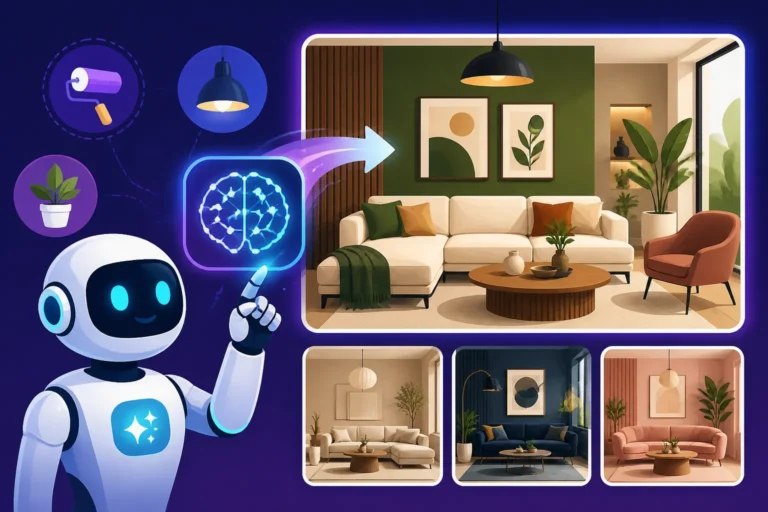
Let's face it, an empty house feels… empty. It's hard to get a sense of scale, flow, or potential when all you see are bare walls and floors. AI tools shine here, enabling you to take a photo of an empty room and, with a few prompts, populate it with stylish furniture, rugs, artwork, and lighting. You can experiment with different aesthetics—modern, minimalist, traditional, bohemian—to appeal to a broader range of tastes without spending a dime on physical inventory or a staging company. This capability is not just about filling a space; it's about creating an emotional connection with the buyer, helping them envision their future within those walls. For example, using a tool like Adobe Firefly, you could upload a photo of a sparse living room and prompt it to "add a cozy, modern sectional sofa, a textured area rug, a minimalist coffee table, and warm ambient lighting," instantly changing the room's entire vibe.
Customizing Styles and Decor
Imagine you're trying to appeal to a young, tech-savvy couple, but the existing furniture is clearly from a different era. Or perhaps you have a sprawling suburban home that could appeal to both families and empty-nesters, and you want to show it in multiple lights. With AI, you have the flexibility to generate various staging options for the same room. You could create one set of images featuring contemporary, family-friendly decor and another with sleek, minimalist designs for a more sophisticated buyer. This level of customization ensures that your listings resonate with your target demographic, making your marketing efforts far more effective. The ability to generate multiple stylistic interpretations for a single space is a powerful way to broaden a property's appeal without ever moving a physical item. For more on creating specific interior design concepts, you might want to read our guide on how to create AI interior design concepts.
| Feature | Traditional Staging | AI Virtual Staging |
|---|---|---|
| Cost | High (thousands for furniture rental, labor) | Low (subscription fee or per-image cost, often free tiers) |
| Speed | Days to weeks (scheduling, delivery, setup) | Minutes to hours (prompting, generation, minor edits) |
| Flexibility | Limited (physical items, difficult to change) | High (easily change styles, colors, layouts digitally) |
| Logistics | Complex (storage, transport, labor, damage risk) | Simple (digital files only) |
| Empty Property | Essential but costly | Ideal, transforms cold spaces affordably |
| Seasonal Changes | Impractical | Effortless (change seasons, lighting digitally) |
| Multiple Looks | Very expensive | Easy and cost-effective |
Enhancing Existing Property Photos
Even if a property is already furnished, there are always opportunities to enhance its visual appeal. AI image tools aren't just for generating from scratch; they're incredibly powerful for editing and refining existing photographs. From decluttering messy spaces to improving lighting, AI can transform ordinary photos into extraordinary ones, making your listings pop.
Decluttering and Depersonalizing Spaces
One of the cardinal rules of real estate is to declutter and depersonalize. Buyers need to envision their life in the home, not the current owner's. But asking sellers to pack away every family photo, souvenir, and overflowing bookshelf can be a sensitive and often ignored request. AI offers a diplomatic solution. You can take existing photos and use AI to subtly remove personal items, clear countertops, or even "tidy up" a slightly messy bedroom. This process creates a clean, neutral canvas that allows buyers to project their own dreams onto the space, without the awkward conversations or actual manual effort. Imagine you have a stunning kitchen with a counter cluttered with appliances and mail; an AI tool can virtually clear that counter, highlighting the beautiful backsplash and ample workspace instead. This not only saves time but also maintains good rapport with sellers.
Adjusting Lighting and Ambience
Photography can be tricky. A perfectly good room might look dark and uninviting if the photo was taken on a cloudy day or with poor interior lighting. Instead of rescheduling a photoshoot or hiring an expensive photo editor, AI tools can dramatically improve the lighting and overall ambience of your images. You can brighten dimly lit rooms, adjust color temperatures to create a warmer or cooler feel, or even add a touch of "golden hour" magic to exterior shots. This allows you to present every property in its best possible light, regardless of the original shooting conditions. A living room that looked drab on a rainy day can be instantly transformed into a bright, airy sanctuary, making it far more appealing to potential buyers scrolling through listings. For those interested in advanced image manipulation, exploring tools discussed in "How to Edit AI Images with Inpainting" could be incredibly useful.
Seasonal and Environmental Enhancements
Selling a beautiful home with lush landscaping in winter can be a challenge when all the trees are bare and the grass is brown. Similarly, a stunning beach house might lose some of its allure if pictured on a stormy day. AI can virtually transform the seasons and environments in your photos. Imagine taking a winter exterior shot and, with a simple prompt, generating an image of the same house bathed in spring blossoms or vibrant autumn foliage. Or perhaps you want to show a potential buyer what the backyard might look like with a newly installed swimming pool or a manicured garden. AI can add these elements seamlessly, providing a vision of potential and beauty that might not be present at the time of the original photoshoot. This flexibility is invaluable for marketing properties year-round, regardless of current weather conditions or existing landscaping.
Conceptualizing Property Development and Land
Real estate isn't just about existing homes; it's also about potential. For developers, investors, and even agents marketing undeveloped land or properties ripe for renovation, visualizing the future is key. AI image generators are incredibly powerful for bringing these future possibilities to life, creating compelling visuals that communicate potential and secure investments.
Visualizing Undeveloped Lots and Land
Selling an empty plot of land can be a hard sell. It often requires buyers to have a strong imagination to see beyond the dirt and weeds to envision the dream home or commercial building that could stand there. AI can bridge this gap by generating photorealistic renderings of what could be. You could input a photo of a vacant lot and prompt AI to "render a modern three-bedroom family home with a two-car garage, surrounded by landscaped gardens" or "visualize a bustling retail complex with ample parking." This allows potential buyers or investors to see the potential value and aesthetic appeal before ground is even broken, significantly increasing interest and perceived value. It takes the guesswork out of visualization and presents a concrete, aspirational image.
Showcasing Renovation and Expansion Potential
Many properties have "good bones" but are desperately in need of renovation or expansion. Explaining this potential verbally or with rough sketches often falls flat. AI tools can generate "before and after" scenarios, or simply illustrate the "after" picture, showing a renovated kitchen, an added second story, or a transformed backyard. For instance, you could take a photo of an outdated 1970s kitchen and use AI to generate an image of it completely modernized with new cabinets, stainless steel appliances, and an open-concept layout. This helps buyers understand the property's true value beyond its current state, making it easier to justify the investment in a fixer-upper. It’s like having an architect and interior designer on demand, producing beautiful concepts quickly. This is particularly useful when you're looking to attract buyers who appreciate a blank canvas but need a little push to see the finished masterpiece. For inspiration on how to make AI images look less AI and more professional, check out our guide "How to Add Realism to AI Images."
Creating Architectural Renderings and Floor Plans
For larger-scale developments or properties requiring significant architectural changes, AI can assist in generating conceptual renderings. While not a replacement for detailed architectural blueprints, AI can quickly produce compelling visual representations of proposed structures, facades, and even interior layouts. Imagine a developer trying to secure funding for a new apartment complex; AI could generate various exterior designs or courtyard concepts based on simple descriptions, helping to refine the vision and present a polished proposal. Some advanced AI tools can even interpret rough sketches or 2D floor plans to generate 3D representations, offering a more immersive view of the proposed space. This capability is invaluable for early-stage planning, marketing, and investor presentations, allowing for rapid iteration and visualization of complex projects.
Marketing Strategies with AI-Generated Images
Generating stunning AI images is only half the battle; knowing how to strategically use them across your marketing channels is where the magic truly happens. AI-generated images aren't just for listing photos; they can power your social media, email campaigns, virtual tours, and even print materials, ensuring a consistent, high-quality visual brand for your real estate business.
Crafting Engaging Social Media Content
Social media is a visual medium, and AI-generated images are perfect for creating scroll-stopping content. Instead of using the same listing photos everywhere, you can repurpose and reimagine them for various platforms. For example, for Instagram, you might showcase different virtual staging options for a single room as a carousel post, inviting followers to vote on their favorite. For Facebook, you could create "before and after" comparisons of a property's renovation potential. You can also generate mood boards or lifestyle images that subtly feature aspects of your listings. This keeps your social feeds fresh, engaging, and highly visual, drawing more attention to your properties and your brand. Imagine a series of posts showing how a backyard transforms from a plain lawn into a vibrant entertainment area, a tranquil zen garden, or a family play zone, all powered by AI. This kind of dynamic content sparks conversation and generates leads. You might also find inspiration in our article on how to make AI social media graphics.
Developing Compelling Email Campaigns and Newsletters
Email marketing remains a powerful tool in real estate, and eye-catching visuals are key to higher open and click-through rates. Use AI-generated images to create compelling headers for your newsletters, showcase a "property of the week" with perfectly staged photos, or illustrate neighborhood highlights with idyllic scenes. You can even personalize images based on subscriber preferences, showing them properties staged in styles they've previously shown interest in. For instance, if a subscriber clicked on listings with modern interiors, your AI could generate new listing images in that specific style for your next email. This level of visual customization makes your emails feel more tailored and relevant, ultimately driving more traffic to your listings and website. This is a smart way to nurture leads and keep them engaged with your brand over time.
Creating Virtual Tours and 3D Experiences
While traditional virtual tours use existing 360-degree photography, AI can enhance these experiences or even create entirely new ones. For properties still under construction or those that are vacant, AI can generate realistic 3D models and walkthroughs. Imagine an empty shell of a house; AI can virtually furnish and decorate it, allowing prospective buyers to "walk through" a fully realized, staged home even before it's complete. For existing properties, AI can clean up imperfections in panoramic shots, add virtual decor, or even change the time of day to showcase the property in different lights. This provides a truly immersive experience that goes beyond static images, giving buyers a deeper understanding and emotional connection to the property. These advanced virtual tools are becoming increasingly important in remote markets or for buyers who prefer to do extensive research online before an in-person visit.
Practical Considerations and Best Practices
While AI image generation offers incredible opportunities, it's essential to use these tools responsibly and effectively. Understanding the limitations, ethical considerations, and best practices will ensure that you leverage AI to enhance your real estate business without misrepresenting properties or encountering unexpected issues.
Ethical Use and Transparency
The power of AI to transform images brings with it an ethical responsibility. It's crucial to be transparent with potential buyers about which images are AI-generated or virtually staged. While AI can create a stunning vision, it should never be used to mislead or misrepresent the actual condition of a property. For example, using AI to remove a large crack in the wall or to make a small backyard appear vast is unethical and could lead to legal repercussions. Always aim to enhance and inspire, not deceive. Many real estate boards and associations are beginning to issue guidelines around AI usage, so stay informed about local regulations. A simple disclaimer like "Virtually staged and enhanced images" can go a long way in maintaining trust.
Prompt Engineering for Optimal Results
Getting good results from AI image generators often comes down to the quality of your prompts. Just like giving directions to a photographer, being specific and descriptive is key. Instead of "modern living room," try "a bright and airy modern living room with a large L-shaped sofa in charcoal grey, natural wood accents, a minimalist coffee table, sunlight streaming through large windows, and a subtle potted fig tree in the corner." Include details about style, mood, lighting, furniture, and even camera angle. Experiment with different parameters and phrasing to see what works best for the specific aesthetic you're trying to achieve. The more detail you provide, the closer the AI will get to your vision. Learning the nuances of "how to write AI image prompts" is a skill that pays dividends.
Integrating AI with Your Workflow
AI image generation shouldn't be a standalone activity; it should integrate seamlessly into your existing real estate workflow. Consider how it can speed up your listing preparation, enhance your marketing materials, and improve client presentations. For example, after a property photoshoot, instead of waiting weeks for professional virtual staging, you could use AI to generate initial concepts within hours for immediate marketing. You can use AI to create consistent visuals across all your listings, reinforcing your brand identity. It's about augmenting your current processes, not replacing them entirely. Many agents are finding success by using AI as a preliminary step, providing high-quality drafts that can then be refined by human designers if needed, or used directly for quick turnaround marketing. This dual approach offers the best of both worlds: speed and professional refinement.
The Future of AI in Real Estate Visuals
The integration of AI into real estate visuals is still evolving, but its trajectory suggests an increasingly sophisticated and indispensable role. What we're seeing now is just the beginning, and staying abreast of these advancements will give real estate professionals a significant competitive edge.
Advancements in Photorealism and Control
AI image generators are constantly improving, with new models and updates pushing the boundaries of photorealism and user control. Expect to see even more lifelike renderings, finer control over specific elements within an image, and better consistency across multiple images of the same property or virtual staging style. Tools like Midjourney, DALL-E, and Stable Diffusion are releasing updates that make it easier to achieve specific artistic and realistic effects. The ability to generate complex scenes with precise details, such as reflections in windows or realistic textures on fabrics, will become commonplace, further blurring the line between AI-generated and traditionally photographed images. This increased fidelity will make AI an even more compelling option for high-end listings and discerning clients. For a deep dive into realism, you might find our article "Best AI Image Generator for Photorealism" helpful.
AI for Predictive Design and Personalization
Imagine AI that not only stages a room but predicts the staging style most likely to appeal to a specific buyer demographic based on market trends and buyer behavior data. This hyper-personalization is on the horizon. AI could analyze a buyer's online activity, preferred styles, and past inquiries to generate bespoke visuals of a property tailored exactly to their tastes. Furthermore, AI could move beyond mere aesthetics to predictive design, suggesting optimal layouts, renovations, or even landscaping choices that would maximize property value or buyer appeal in a particular market. This would transform real estate marketing from a broad-strokes approach to a highly targeted, data-driven strategy, making the sales process incredibly efficient and effective.
Integration with VR/AR and Interactive Experiences
The future of AI in real estate visuals isn't confined to static images. We're already seeing glimpses of AI-generated content integrating with virtual reality (VR) and augmented reality (AR) platforms. Imagine a potential buyer walking through an empty lot with an AR app on their phone, seeing a fully rendered, AI-designed home appearing before their eyes as if it were actually there. Or a VR headset allowing full, interactive tours of properties that only exist as blueprints. AI will be the engine behind generating these immersive, interactive experiences, allowing buyers to customize finishes, move virtual furniture, and explore properties in ways that static photos or even traditional virtual tours can't match. This level of immersion will redefine how properties are viewed, marketed, and ultimately sold.
Disclaimer
The information provided in this article is for general informational purposes only and does not constitute professional advice. While AI image generators offer powerful tools for real estate, users should exercise due diligence, adhere to local real estate regulations, and ensure transparency when using AI-generated content in commercial listings. The capabilities and ethical implications of AI are constantly evolving.