Free AI Image Generators That Rival Paid Tools
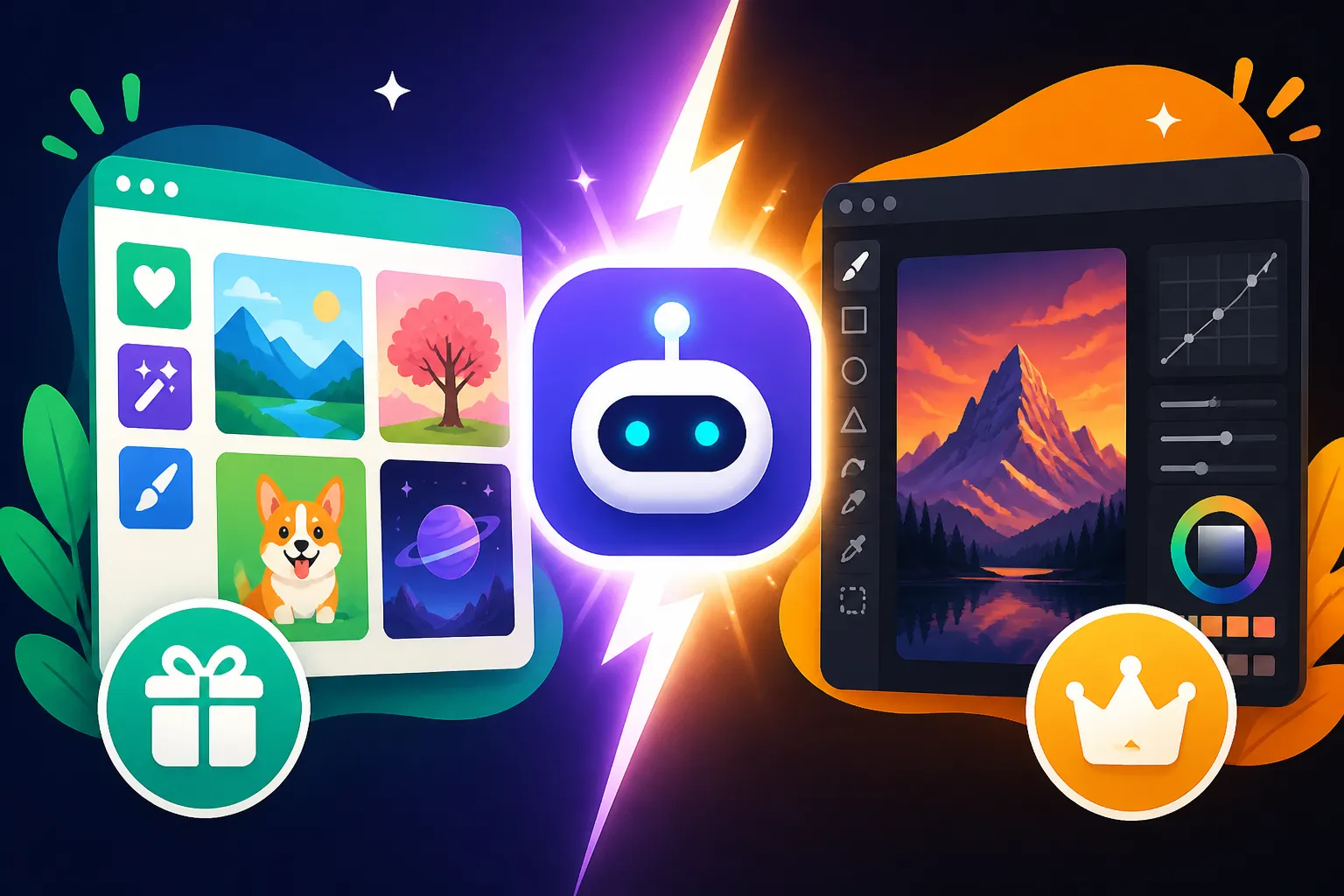
It's incredibly frustrating when you're trying to create amazing visuals for your projects, only to hit a paywall every time you find an AI image generator that actually looks good. The idea that quality AI art always comes with a hefty subscription fee can be a real barrier, making creative expression feel out of reach for many. But what if I told you there are genuinely free AI image generators out there that don't just produce decent results, but actually rival some of the paid tools? This guide is all about uncovering those gems and showing you how to harness their power without breaking the bank.
The Myth of "Free Means Inferior" in AI Image Generation
For a long time, the perception was that if you weren't paying, you weren't getting quality. This was often true in the early days of AI image generation, where free options were rudimentary at best, plagued by weird artifacts, poor resolution, and a distinct "AI look" that was hard to shake. It felt like a necessary evil to shell out for the premium services if you wanted anything remotely professional.
Why Many Creators Assume Paid is Always Better
It's easy to fall into the trap of thinking that a higher price tag automatically equals superior quality and features. We're conditioned to believe that developers put their best work behind a subscription, and that free versions are merely glorified demos with severe limitations, watermarks, or restrictive commercial licenses. Many early experiences with free tools often involved clunky interfaces, long wait times, and images that looked more like abstract art than what you actually prompted for. This past experience certainly solidified the belief that if you wanted something reliable, especially for commercial use, you had no choice but to subscribe to a service like Midjourney or the higher tiers of DALL-E.
The constant push from paid platforms showcasing their incredible outputs also contributes to this perception. They invest heavily in marketing and user-friendly interfaces, making the idea of struggling with a "free but complicated" tool less appealing. For example, when you see stunning, hyper-realistic images generated by a paid tool, it's natural to assume that level of fidelity is exclusive to those who pay. It creates a mental block, making users hesitant to even explore the free alternatives, thinking they'll just waste their time.
How Free Tools Have Evolved to Compete
However, the landscape has changed dramatically in the last couple of years. Driven by rapid advancements in AI research and a growing open-source community, many free AI image generators have not only caught up but are actively innovating in ways that challenge their paid counterparts. These tools often leverage powerful underlying models, sometimes even variations of the same technology found in premium services, and have refined their algorithms to produce stunning, high-quality images.
The motivations behind offering robust free tiers are varied. Some platforms use a freemium model, hoping to entice users with a generous free offering before they upgrade for advanced features or higher usage limits. Others are built on open-source foundations, where the community contributes to their development and improvement, making them incredibly powerful and accessible. This collaborative environment means that bugs are squashed faster, features are added constantly, and the quality improves at an astonishing pace. Many of these free tools have incorporated sophisticated features like inpainting, outpainting, and consistent character generation, which were once exclusive to expensive platforms, proving that "free" no longer means "feature-poor." They've recognized the demand for accessible, high-quality tools and have stepped up to the plate, often with surprising results that might just make you rethink your budget.
Top Free AI Image Generators That Stand Shoulder-to-Shoulder with Paid Tools
It’s time to shine a spotlight on the true champions of the free AI image generation world. These platforms offer exceptional quality and capabilities that genuinely compete with paid alternatives, making professional-grade visuals accessible to everyone.
Ideogram: The Text Master for Free
Let's be honest, getting legible text in AI-generated images has been the bane of many creators' existence. It often comes out as gibberish, warped letters, or just an unreadable mess, even on some of the most expensive platforms. That's where Ideogram truly shines, setting itself apart as a powerful contender, especially if your creative vision involves integrating words seamlessly into your visuals. It consistently delivers crisp, readable text, which is a game-changer for logos, posters, book covers, or social media graphics where typography is crucial.
Ideogram's strength isn't just limited to text, though. It's also remarkably good at understanding complex prompts and generating visually striking images across a wide range of styles, from photorealistic to illustrative. Many users find its free tier to be incredibly generous, allowing for a substantial number of generations daily. This makes it an ideal tool for bloggers looking to create captivating featured images or small businesses needing quick mock-ups for marketing campaigns. If you've ever found yourself tearing your hair out trying to get DALL-E or Stable Diffusion to spell something correctly, Ideogram will feel like a breath of fresh air. It proves that you don't need a premium subscription to produce professional-looking graphics with integrated text. Want to dive deeper into its free offerings? Check out our guide on how the Ideogram Free Tier Explained .
Bing Image Creator Powered by DALL-E: High-Quality for Microsoft Users
If you're already integrated into the Microsoft ecosystem, or even if you're not, Bing Image Creator is a fantastic free option that often flies under the radar. What makes it so powerful? It's directly powered by DALL-E, one of the leading AI image generation models, meaning you're getting cutting-edge technology without the direct cost. The quality of images generated here can be surprisingly good, producing detailed and imaginative visuals that hold their own against many paid services.
The interface is incredibly user-friendly, making it a breeze for beginners to get started. You simply type your prompt, and it generates a set of images for you to choose from. It's an excellent choice for casual users, students, or anyone who needs to quickly generate high-quality images for presentations, personal projects, or social media posts. The fact that it leverages DALL-E's robust capabilities means you can expect decent coherence and artistic flair in your outputs, making it far from a "basic" free tool. It's a testament to how accessible powerful AI has become. If you're curious about maximizing its potential, our article on How to Get the Most from Bing Image Creator Free Plan has some great tips.
Leonardo AI: A Playground for Control and Customization
Leonardo AI has quickly become a darling in the free AI image generation community, particularly for those who crave more control and customization over their creations. While it does offer paid tiers, its free offering is incredibly generous, providing daily credits that allow for extensive image generation. What truly elevates Leonardo AI is its vast library of community-trained models and fine-tuned models, often referred to as "LoRAs," which users can leverage. This means you're not just working with one generic model; you have access to specialized models optimized for specific aesthetics, styles, or subjects, giving you an unprecedented level of creative freedom.
From photorealism to fantasy art, anime to architectural renders, Leonardo AI's diverse model library ensures you can achieve highly specific artistic visions. It also boasts powerful editing tools like image-to-image prompting, inpainting, and outpainting, allowing you to refine your generated images without needing external software. This makes it an excellent choice for artists, game developers, or content creators who need a versatile tool that can adapt to different project requirements. If you're looking to push the boundaries of what free AI art can do, Leonardo AI provides the tools to do it. Discover more about its generous offerings in our detailed look at the Leonardo AI Free Tier Explained.
Stable Diffusion (via online interfaces): Open-Source Powerhouse
Stable Diffusion isn't just a tool; it's an entire ecosystem, and its open-source nature means you can access incredibly powerful image generation capabilities for free, often through various online interfaces. While running it locally can be more complex, numerous websites and platforms provide free access to Stable Diffusion's models, democratizing advanced AI art generation. These platforms often offer different versions of the model and allow for extensive parameter tweaking, giving users a deep level of control that rivals many paid solutions.
The true strength of Stable Diffusion lies in its flexibility and the sheer volume of community-created resources, including custom models and detailed guides. You can generate everything from photorealistic portraits to stylized digital paintings, and with the right prompts and settings, the quality can be astounding. While it might have a slightly steeper learning curve than some point-and-click generators, the control it offers over aspects like style, composition, and even specific artistic elements is unparalleled. Many of these free online instances also support advanced features like ControlNet, allowing for precise pose and composition control. For those willing to explore and experiment, Stable Diffusion offers an endless wellspring of creative potential without the financial commitment. Learn more about the intricacies in our Stable Diffusion Free Tier Explained guide.
Here's a quick comparison of these powerful free tools:
| Feature/Tool | Best For | Text Generation Quality | Customization/Control | Free Tier Highlights |
|---|---|---|---|---|
| Ideogram | Logos, graphics with embedded text | Excellent | Good | Generous daily generations, strong typography |
| Bing Image Creator | Quick, high-quality images | Moderate to Good | Basic | DALL-E 3 powered, easy to use, unlimited daily boosts |
| Leonardo AI | Artists, game dev, diverse styles | Moderate | Excellent | Daily credits, access to community models, inpainting |
| Stable Diffusion | Advanced users, specific styles | Variable (model-dependant) | Excellent | Open-source flexibility, vast community resources |
Getting the Most Out of Your Free AI Image Generation Experience
Just because these tools are free doesn't mean you should approach them casually. To truly make them rival paid alternatives, you need to understand how to leverage them effectively, mitigate their weaknesses, and stay aware of the practical implications of using AI-generated content.
Crafting Effective Prompts for Optimal Results
The old adage "garbage in, garbage out" couldn't be more true for AI image generators, especially when you're trying to coax professional-grade results from free tools. A strong, detailed, and well-structured prompt is your secret weapon. Think of your prompt as a detailed instruction manual for an artist—the more specific and descriptive you are, the closer the final artwork will be to your vision. Simply typing "dog" will get you a generic dog, but "a majestic golden retriever sitting on a sun-drenched beach at sunset, hyperrealistic, cinematic lighting, 8K, intricate details, bokeh background" will yield something far more stunning.
It's not just about adding more words; it's about adding the right words. Focus on core elements like the subject, style, artistic medium, lighting, composition, colors, and even specific camera angles. Experiment with keywords that describe artistic movements (e.g., "impressionistic," "surrealist"), famous artists (e.g., "in the style of Van Gogh"), or rendering engines (e.g., "Unreal Engine 5," "Octane Render"). Don't forget negative prompts either, which tell the AI what not to include (e.g., "ugly, distorted, blurry, extra limbs"). Learning how to write effective prompts is a skill in itself, and it's perhaps the most critical factor in determining the quality of your free AI-generated images. Our guide on How to Write AI Image Prompts is a fantastic place to start to master this essential skill, and for specific realistic results, check out How to Write AI Prompts for Photorealistic Images.
Understanding Limitations and When to Consider Upgrading
While these free tools are incredibly powerful, it's important to approach them with a realistic understanding of their limitations. No free tool is a perfect substitute for a premium subscription in every scenario, and knowing these boundaries will save you a lot of frustration. For instance, consistency across multiple images, especially for complex characters or scenes, can still be challenging with free models, though tools like Leonardo AI are making strides in this area. Some free platforms might impose daily generation limits, slower processing speeds, or output images at slightly lower resolutions, which might not be ideal for large-scale prints or highly detailed commercial work.
There might also be instances where a specific artistic style or a very niche request is simply better handled by a specialized paid model or a tool with extensive fine-tuning capabilities that aren't available in the free tier. If you find yourself constantly hitting usage limits, struggling to achieve consistent branding, or needing advanced editing features like seamless inpainting for complex commercial projects, that's a good indicator that it might be time to consider a budget-friendly paid plan. Think of free tools as powerful entry points, but acknowledge that professional demands sometimes require professional investments. Sometimes, paying a small subscription fee for a tool like Adobe Firefly or a basic Midjourney plan can dramatically streamline your workflow and unlock features that free tools simply can't match, especially for critical client work.
Navigating Commercial Use and Licensing
This is perhaps one of the most critical, yet often overlooked, aspects of using free AI image generators: understanding the terms of commercial use. Just because you can generate an image for free doesn't automatically mean you have the legal right to use it for profit, such as on your blog, in marketing materials, or on products you sell. Licensing terms vary wildly from platform to platform, and failing to adhere to them can lead to significant legal headaches down the line.
Some free AI image generators, like Bing Image Creator and Ideogram, often offer commercial use rights for images created under their free plans, as long as you adhere to their terms of service. However, it's always, always essential to read the fine print for each specific platform. Look for clauses regarding ownership, attribution requirements, and any restrictions on usage. For open-source tools like Stable Diffusion, the licensing can be even more complex, depending on the specific model used and the interface you access it through. Always verify if the generated images are truly Free AI Image Generators with Commercial Use and if there are any specific conditions (e.g., needing to attribute the AI tool). When in doubt, err on the side of caution or consider generating images through paid plans that explicitly guarantee commercial rights and indemnification, especially for client projects or products that will generate revenue. Taking a few minutes to understand the legalities can save you a world of trouble and ensure your creative work is both impressive and compliant.
Disclaimer
The information provided in this article is for general informational purposes only and does not constitute professional advice. While we strive to provide accurate and up-to-date information, the field of AI image generation is rapidly evolving, and details regarding features, pricing, and terms of service for various platforms may change without notice. Always consult the official websites and terms of service of any AI tool before making decisions based on its offerings, especially concerning commercial use and licensing.